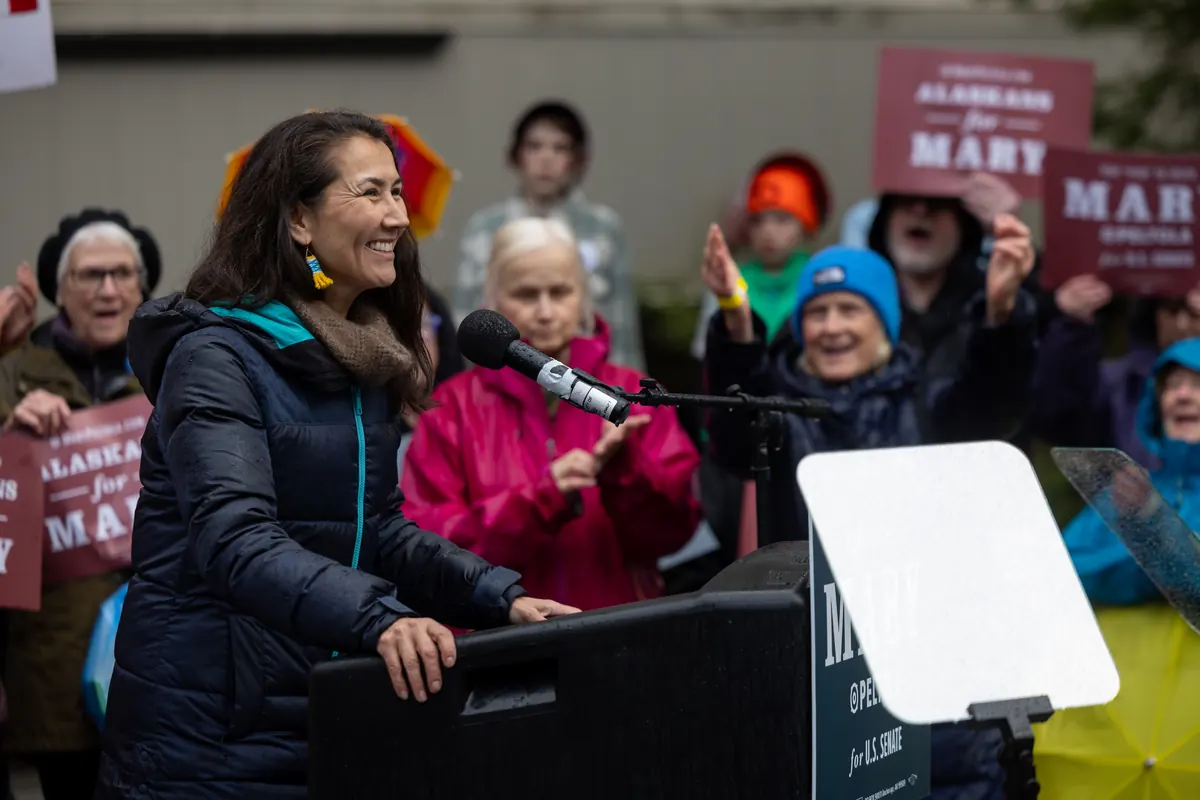
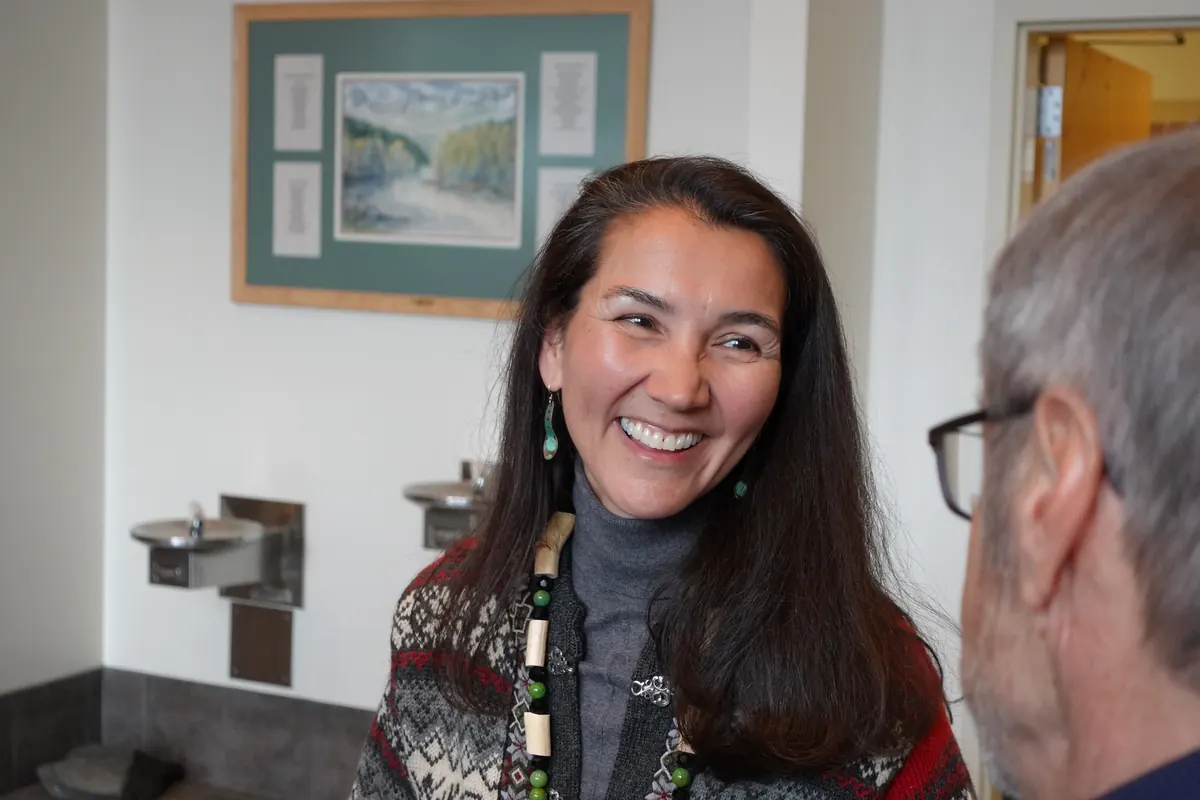
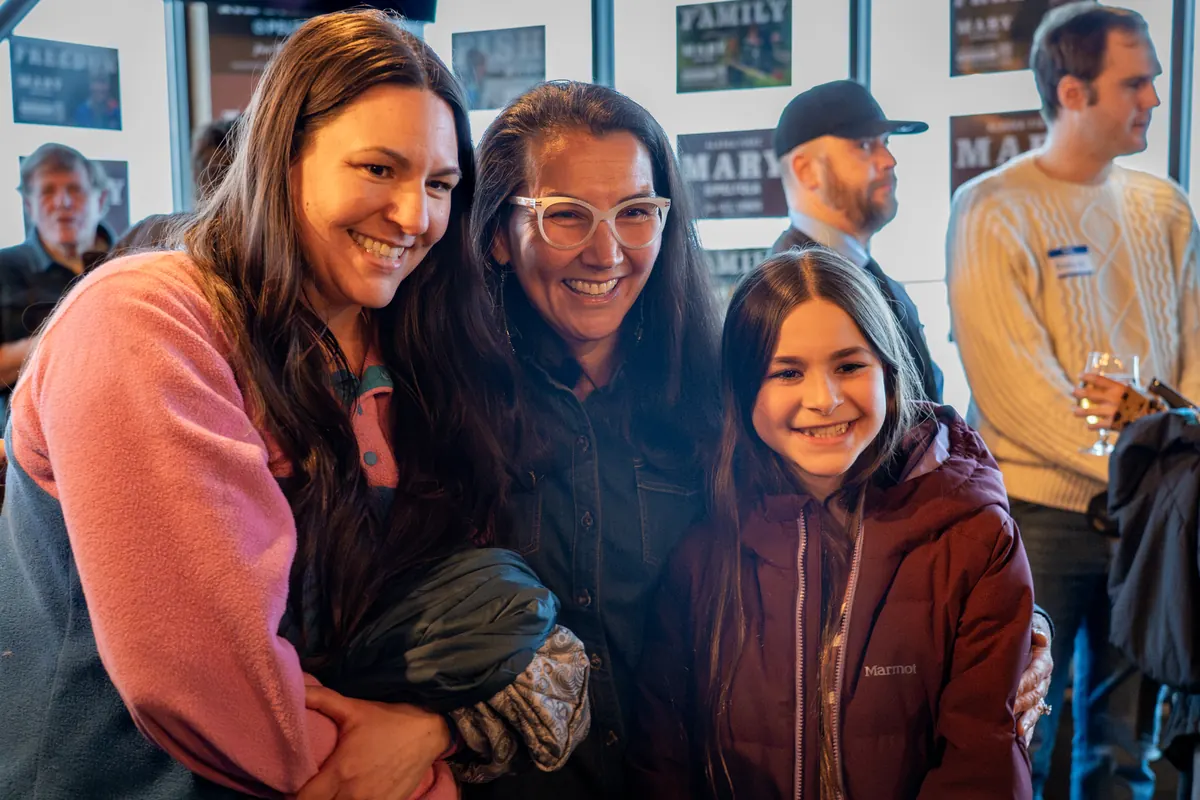
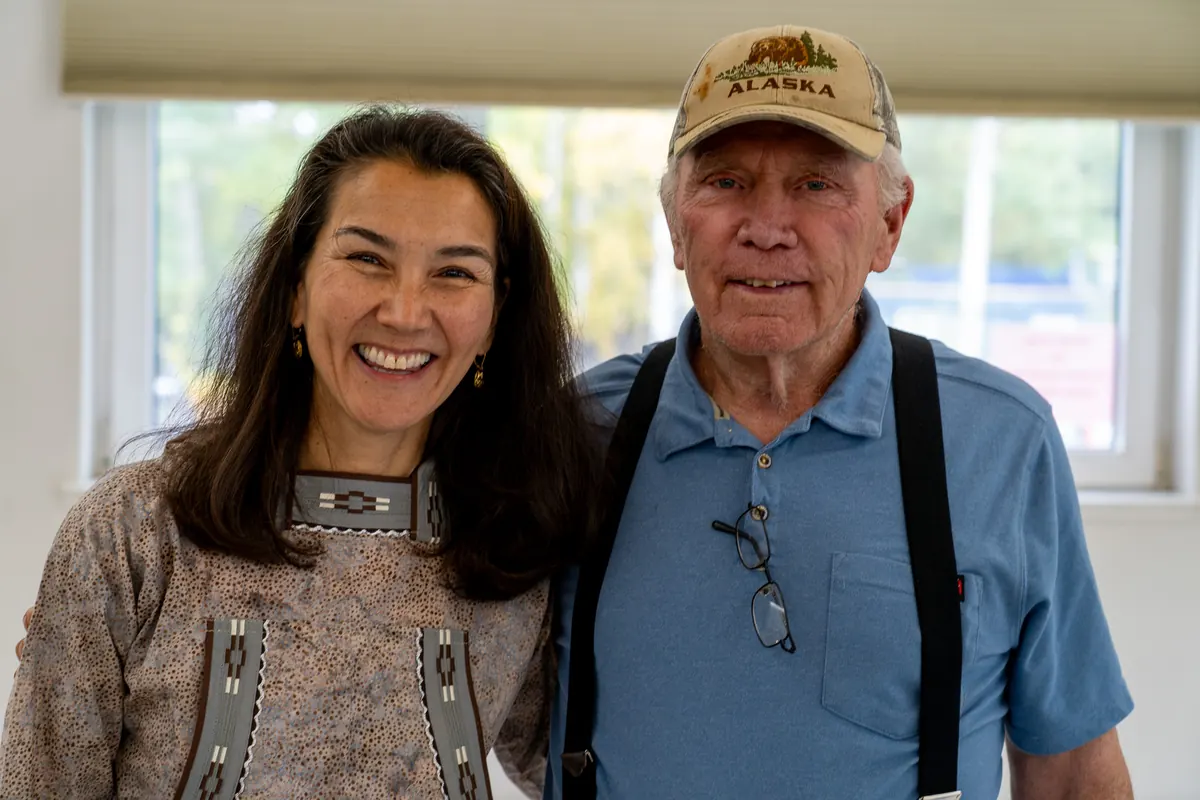
NYT: Mary was “one of the few Democratic members of Congress defending the oil and gas industry”
“I will stand up to anyone to increase Alaska energy production, create good-paying Alaska jobs and lower energy costs” – Mary Peltola
Mary Peltola is again being recognized for her tireless advocacy for Alaska oil and gas and “relentless focus on economic and cost-of-living issues.” A new column out yesterday dives into her strong track record as “one of the few Democratic members of Congress defending the oil and gas industry,” and lays out her plan to lower energy costs for Alaskans and unleash Alaska oil and gas.
As the piece documents, Mary has always been a champion for Alaska energy, consistently standing up to anyone – including Joe Biden – to promote oil and gas development, secure approval of the Willow Oil Project, bring down costs, and create good-paying Alaska energy jobs. In the U.S. Senate, she will fight to lower Alaskans’ energy costs by modernizing energy infrastructure, pushing through meaningful permitting reform, and working alongside local communities to ensure the benefits of Alaska resources stay in Alaska.
The New York Times: OPINION: The Democratic Senate Candidate Who Wisely Defends Oil
September 14, 2026
- When liberals imagine the kind of candidate who can win Republican votes, they probably conjure up someone magnetic and prophetic — someone with an X factor that convinces people to change their minds.
- Mary Peltola — the 53-year-old former Democratic congresswoman and judge who is running for Senate in Alaska — is trying to win over Republicans another way. She is warm, practical and relentlessly focused on economic and cost-of-living issues. And she is breaking with Democratic messaging on a crucial topic: She wants to expand (and even subsidize) fossil-fuel production and refining in Alaska.
- Since at least the 2010s, the Democratic Party has looked skeptically at the oil and gas industry. As 2020 presidential candidates, Kamala Harris, Elizabeth Warren and Bernie Sanders vowed to ban fracking, even though the president does not have the power to do so. President Joe Biden — who did not promise a nationwide ban on the campaign trail — tried to stop oil exploration in the Arctic and pause the expansion of natural gas exports.
- When Ms. Peltola, an Alaska Native, was elected to the House in 2022, she became one of the few Democratic members of Congress defending the oil and gas industry. She joined the Western Caucus — which she described as “106 Republicans and me” — to call for more drilling and resource extraction. She voted to overrule an Environmental Protection Agency regulation cutting pollution from heavy-duty trucks. She endorsed high-profile oil export projects and tried to block the federal government from regulating or banning gas stoves. (She also won an endorsement in 2024 from the Alaska Center, a state environmental group.)
- Now she says her goal is to cut energy costs for Alaskans as quickly as possible — whether that means building more renewables or investing in the state’s oil refining capacity.
- At a time when many Democrats are trying to make sense of the Biden era’s failures and win back the working class, Ms. Peltola offers a different kind of energy posture, one that may be more responsive to what voters say they care about. Alaska has a unique geography, a small population and an unusual dependence on natural resources. What wins elections there may not work in the rest of the country. Still, in order to prevail in states such as Alaska, Democrats need a faction that can live with oil and gas. And Ms. Peltola is showing them one way that it’s done.
- Speaking at a candidate forum at an oil and gas conference in 2024, Ms. Peltola made it clear that she disagreed with her party on energy policy. The Biden administration, she said, had ignored the wishes of the Alaska Natives, who benefit from local oil and gas production, despite promising to give them a seat at the table. She called out “the Lower 48 extremists who want to turn all of Alaska into a preserve.”
- In 2023, she championed the Willow project, an enormous ConocoPhillips venture that will unlock a new source of oil in northern Alaska and bring billions in revenue to the state government and some Native communities. It would also increase U.S. emissions, but only by a small amount relative to what Mr. Biden’s signature climate law, the Inflation Reduction Act, was poised to reduce. The oil project — which was ultimately approved by Mr. Biden — was among the most contested environmental decisions of his presidency.
- Ms. Peltola was not embarrassed to defend Willow; she even claims she helped convince Mr. Biden to support it. Whenever progressives pointed out that the project would increase greenhouse gas emissions, Ms. Peltola responded that the climate problem is driven as much by demand as by supply. In one interview, she said she didn’t like people referring to the project as a “carbon bomb.” She went on, “The folks who were saying that about this project came from districts where every single day the mere existence of their district is a carbon bomb.”
- As long as other parts of the country or world want oil, it was wrong, in her view, to say Alaska (and the Alaskan Natives who would benefit from the sale) shouldn’t sell it. “I take umbrage with some of these extreme environmental groups,” she told a public radio station. “Because I don’t feel like they — many of the people in that movement — are willing to curtail any of their energy uses, whether it’s on their computer or in their car or plane trips, but they expect us to stop producing.”
- This reframing might strike many environmentalists who’ve purchased electric vehicles or cut back on flying as unfair. But Ms. Peltola is partly responding to an asymmetry in how the government treats oil rights. Because the federal government owns much of the land in northern Alaska, politicians can regulate oil drilling there in a way they cannot regulate it in, say, Texas. That makes local Alaska Native governments — who may rely on oil infrastructure for their tax revenue — captive to the federal government’s decisions.
- And while I would not co-sign all of Mr. Peltola’s comments, she is right in at least one broader sense as well. Climate change is a global problem, caused by the world’s immense supply of fossil fuels and humanity’s boundless hunger for them. At this point, most future emissions will come from rapidly developing countries in Southeast Asia and sub-Saharan Africa. Billions of people in those countries want economic development — and if that requires burning fossil fuels, then they will likely do so.
- Solving climate change, in other words, depends on making low-carbon energy technologies cheaper than fossil fuels. But right now, immense demand exists worldwide for fossil fuels — and someone will meet it. If most Alaskans support oil production in the state — in part because doing so drives local government revenue — then local politicians must recognize that desire.
- Democracy is, as the progressive historian Timothy Shenk has argued, a machine for translating ordinary people’s views into policy. And here ordinary people’s views are clear: They prefer inexpensive energy.
- It’s a testament to how thorny this issue remains that Ms. Peltola declined my request for an interview. “I will stand up to anyone to increase Alaska energy production, create good-paying Alaska jobs and lower energy costs,” she said in a written statement.
- Ms. Peltola offers a middle way, combining an openness to cheap energy with a populism that pledges to fight a broken system. I would not want a Democratic Party composed entirely of senators like her, and we will still need politicians who are adamant about emissions reductions and boosting clean energy technology. But if Democrats want to accomplish their biggest goals and bring a measure of stability back to politics, if they want to appoint justices to the Supreme Court and challenge an unjust status quo, it will come from electing a supermajority of politicians who fit their states — politicians like Mary Peltola.