“There’s nothing partisan about it” – Mary Peltola
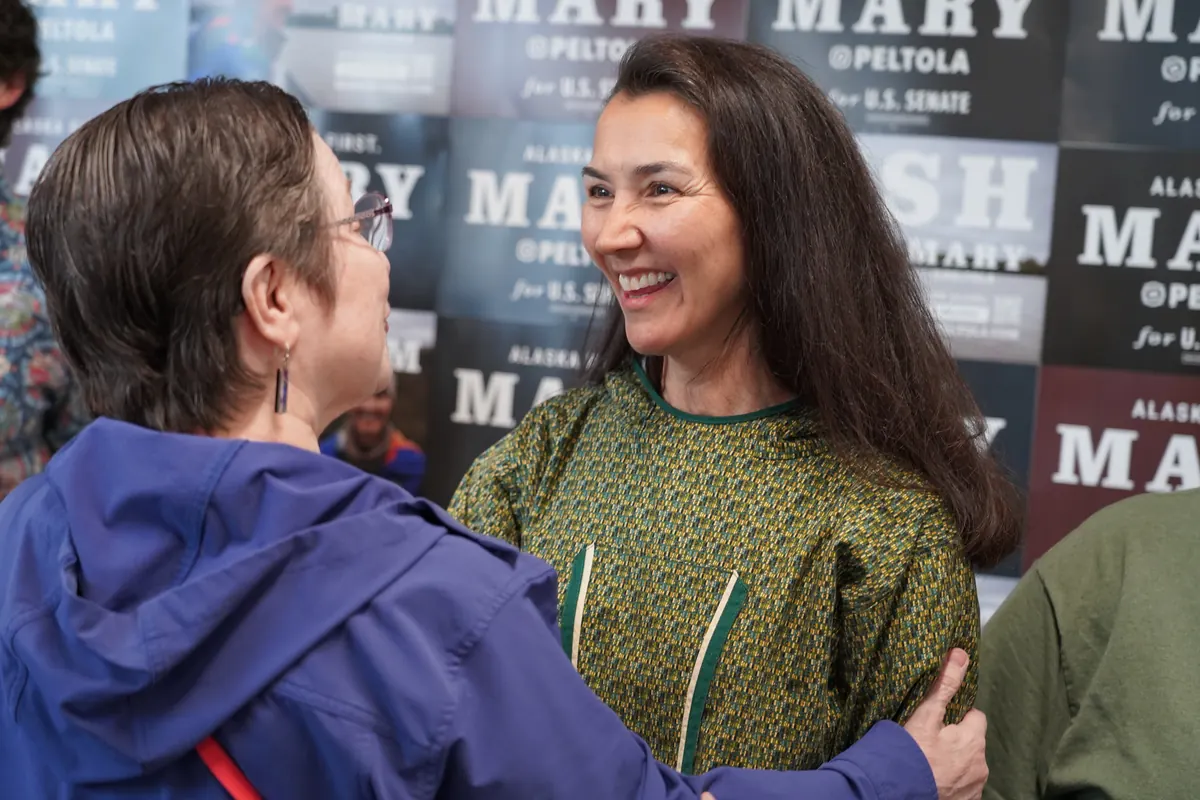
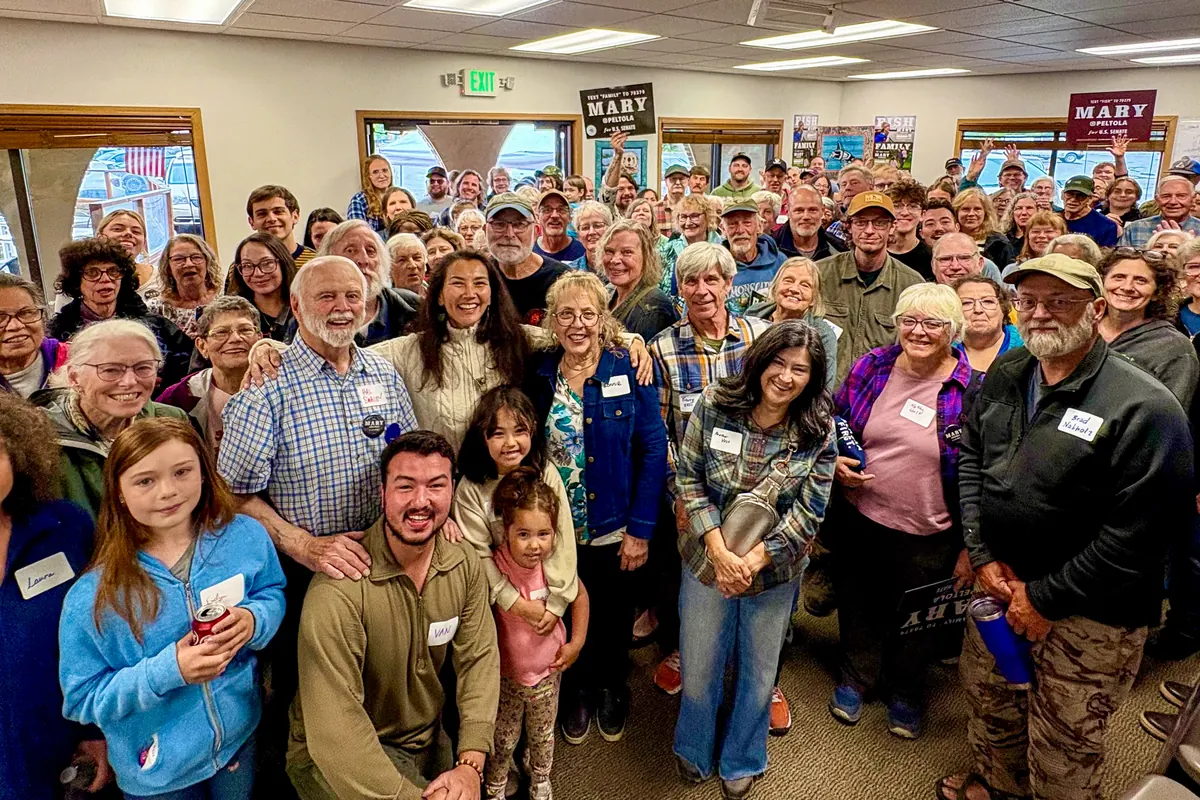
New reporting lays out how Mary Peltola’s Alaska first campaign and fight for Alaska fishermen, fisheries, and the communities they sustain is powering bipartisan, grassroots support for her campaign as “Alaska’s fish are in crisis,” and “anti-trawl sentiment has caught on, politically, around the state.”
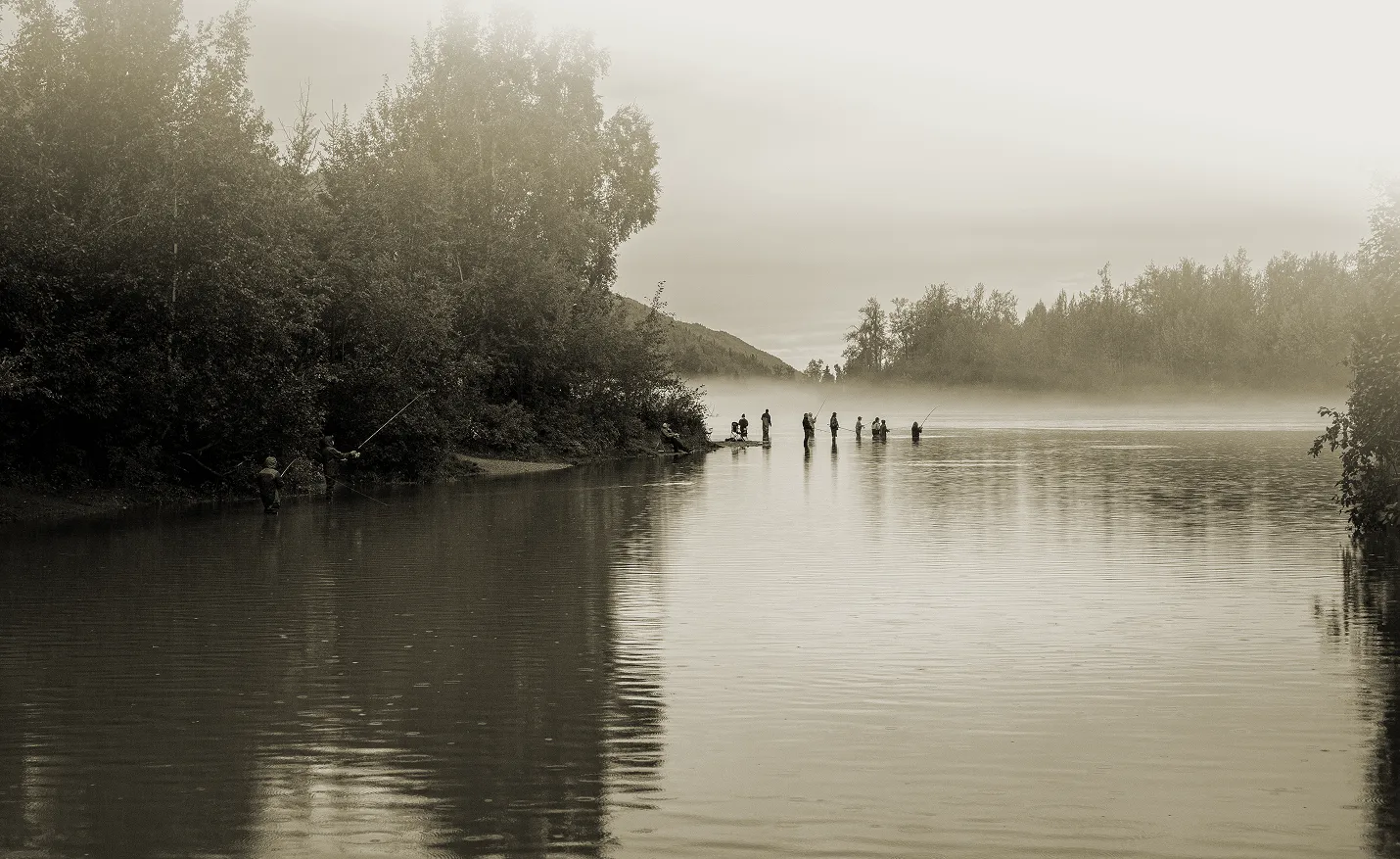
The reporting details how Mary’s dogged focus on restoring Alaska fisheries is resonating across party and demographic lines in Alaska, with three-quarters of Alaskans supporting Mary’s plan to ban factory trawling, and “virtually no difference in the level of support between Democrats, Republicans, and independents.” As king salmon populations have declined “as much as eighty per cent from average levels” and chum salmon have “been down as much as ninety per cent,” Mary’s platform and fight to put Alaska first is resonating across sport, commercial, and subsistence fishermen alike.
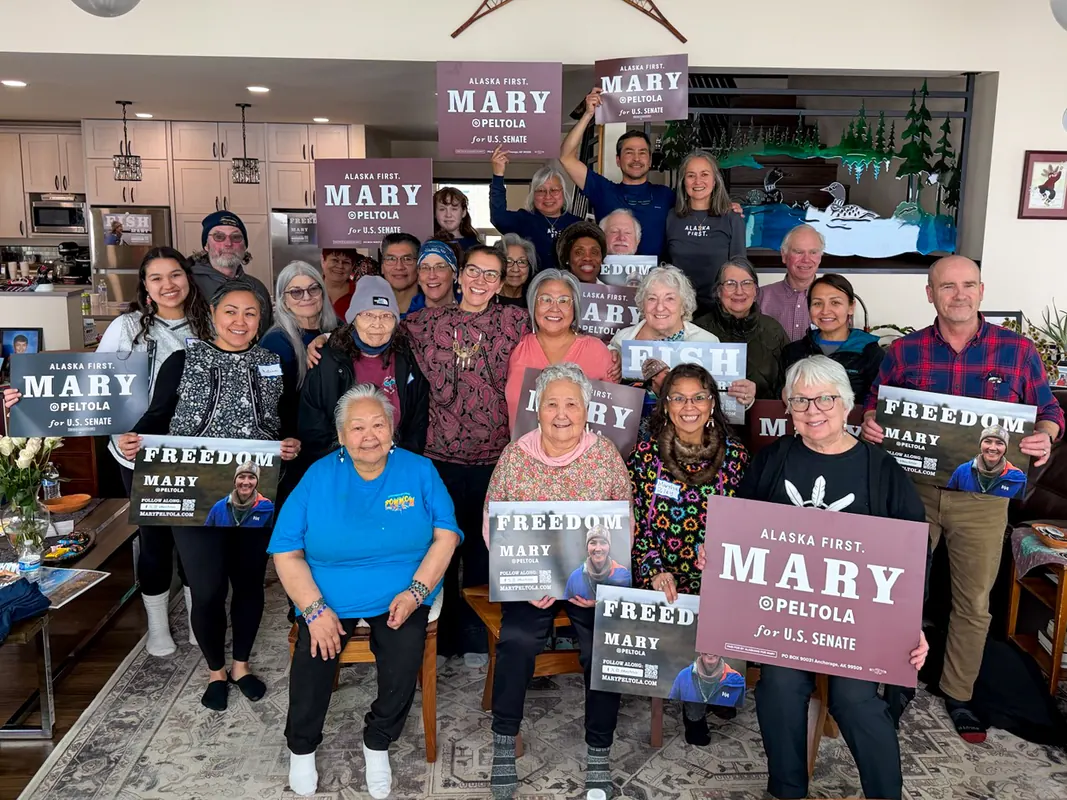
Relying on conversations with everyday Alaskans, the piece emphasizes Mary’s Alaska first attitude, highlighting her record of bipartisanship, tireless focus on putting Alaska first, not either political party, and fight for the issues Alaskans care about, like protecting second amendment rights, unleashing Alaska oil and gas, and restoring Alaska fisheries.
In contrast to Mary’s authentic Alaska roots, the piece also notes that fisheries being a major issue is “less good for Sullivan” who is “not a commercial fisherman,” and unmasks his toothless election-year bycatch bill as “wonkish” and “incremental.”
Read more:
New Yorker: Alaska’s Senate Race Could Be Decided by Salmon
- Perhaps the most important thing to know about Alaska’s Senate race, a close contest between the Republican incumbent, Dan Sullivan, and the former congresswoman Mary Peltola, is that salmon are pretty amazing fish. There’s the swimming upstream, the spawning, and the dying. Bears love salmon. Orcas love salmon. People love salmon. Without salmon, the first Alaskans, crossing the Bering land bridge some fifteen thousand years ago, could not have survived.
- Directly or indirectly, salmon feeds almost everything in the state, including its politics. Alaska’s bid for statehood, in the late nineteen-fifties, was in part a matter of keeping the hands of Seattle businessmen off local salmon stocks. Business deals are hammered out at fishing retreats. In 2010, a seaplane carrying Ted Stevens, likely the most powerful politician ever to come out of Alaska, crashed en route to a salmon lodge near Bristol Bay. He died wearing his waders.
- But Peltola really wants to talk about fish. Recently, I saw her speak at the elementary school in Utqiagvik, an Arctic town at the state’s northern tip. It was a very unusual stump speech. She apologized for the “super negative, toxic ads” flooding the state, including her own.
- And even though, compared with the rest of the state, salmon is not so big in Utqiagvik, Peltola still mostly talked about fish.
- This piscine primacy is relatively new in Alaska’s politics. In past election cycles, fish have always been one issue among many. But Alaska’s fish are in crisis. In recent years, runs of Chinook, or king salmon, the biggest and most revered species on the Yukon River, have been down as much as eighty per cent from average levels, according to the National Oceanic and Atmospheric Administration. Chum salmon, a more ordinary variety, have had an O.K. year, but they’ve been down as much as ninety per cent. Some species and some areas are worse off than others, but the general trend is bad, including for the state’s other two iconic seafood catches, halibut and crab.
- As I travelled around the state, I was surprised to find that virtually everyone I talked to was upset about the fish situation. One political consultant explained, “A lot of people come into the state, and they’re, like, ‘Why the hell is Mary Peltola “fish, family, freedom”?’ I’m a white guy who lives in Anchorage, and my freezer is currently full of rockfish, halibut, and salmon that I’ve caught because that’s just what we all do.”
- The crisis is worst up rivers such as the Yukon and the Kuskokwim. For many thousands of years, entire Athabascan and Yup’ik villages have subsisted on salmon. Indigenous residents have been delivering emotional testimony at meetings of the North Pacific Fishery Management Council (N.P.F.M.C.), which was created by Congress to oversee the region’s federal fisheries.
- “I got nine grandkids. My two youngest ones haven’t even tasted fish,” Robert Albert, a local from Tanana, said at a meeting in February. Life and social structures in remote river villages are rooted in summer fish camps, where the community catches, processes, and preserves the salmon that feeds them through the winter. But stocks have got so low that, in 2024, the Alaska government, in conjunction with Canada, shut down fishing for king salmon on the Yukon River and its Canadian tributaries for seven years—one complete king-salmon life cycle. The fish camps stand empty.
- “I wish I could express to you what it feels like for a man who provided for multiple families to become a beggar,” Carrie Stevens, who testified to the N.P.F.M.C. as a representative of the Council of Athabascan Tribal Governments, told me. Janessa Newman, from Rampart, told the council, “My immediate concern is whether I can morally bring my own children into this world without fishing on the Yukon River.”
- But activists in Alaska have mostly focussed their ire on a type of fishing known as trawling. In the Bering Sea and the Gulf of Alaska, the main target of commercial fishing boats is pollock, a medium-sized, mild fish that swims in fantastically vast schools. Trawlers catch pollock by dragging enormous nets; some open wide enough to swallow a thousand M.T.A. buses. Any net you put in the water will incidentally catch other, non-targeted fish. This is known as bycatch.
- Every year, the Alaskan pollock industry brings up around twenty thousand king salmon and around a quarter million pounds of halibut as bycatch. Recently, anger at this collateral damage, heightened by the fish shortage, has evolved into a political movement.
- On Facebook, the group Stop Alaskan Trawler Bycatch, launched in early 2020, has close to sixty thousand members, almost a tenth the population of Alaska itself. It calls for a ban on trawling. “You know how ‘Tiger King’ came out during lockdown and got big? The Facebook group was the same thing,” David Bayes, who moderates it, told me.
- Peltola, who is Yup’ik and grew up along the Kuskokwim, joined the group in its early days. At the time, she was the head of the Kuskokwim River Inter-Tribal Fish Commission, a nonprofit that co-manages fishing resources with the government. Two years later, in a special election in 2022, she emerged out of a crowded top-four primary to defeat Sarah Palin, becoming the first Democrat since 1970 to win Alaska’s sole House seat. That campaign’s defining issue was trawl bycatch.
- This year, she is campaigning on a call to ban out-of-state factory trawlers. This anti-trawl sentiment has caught on, politically, around the state. It has become a marquee issue in races for governor, the state legislature, and even in municipal elections. “There was one guy running for school board talking about trawl,” Bayes told me.
- I’d assumed that pollock people—businesspeople—would lean Republican, and the salmon people—the conservation-oriented—would lean Democratic, but that’s not really the case. “There’s nothing partisan about it,” Peltola told me recently. “When you ask folks who are MAGA why they’re splitting the ticket and voting for me, it’s largely because of trawling.” (The campaign later pointed out that a lot of those voters are also animated by high fuel prices.)
- Politics in Alaska are idiosyncratic. They rarely map onto a national partisan model. Republicans outnumber Democrats two to one, but independent voters outnumber both. “Partisan politics doesn’t work that well for a candidate,” Tony Knowles, the last Democrat to serve as governor, told me. A government staffer in a remote region put it to me, “Locally, no one gives a shit about the parties.”
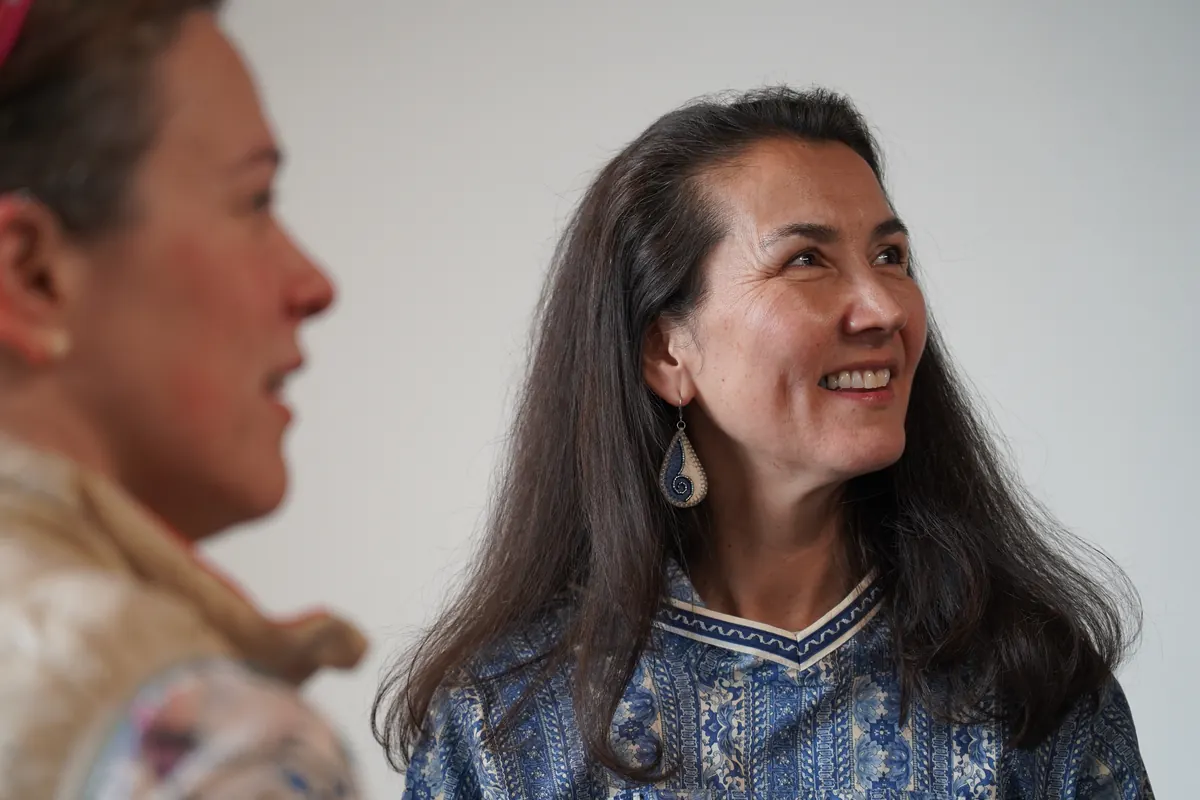
- Peltola knows that relationships can be just as important as parties. She has been friendly with Palin since they ran against each other in 2022. At one debate during that race, they wore matching earrings; Peltola had given them to Palin as a gift. (“It’s an Alaska-chick thing,” Palin said.)
- The fact that subsistence fishing has become important to the campaign is good for Peltola, who once wrote of herself, “I am made of fish,” and less good for Sullivan, who is originally from Ohio and not a notable angler. On a walk in Anchorage, I saw a sidewalk chalked with the words “DAN EATS FARMED FISH WITH KETCHUP.”
- But he, too, has been forced to weigh in on the issue. In June, back in D.C., he introduced a trawling bill that offered wonkish, incremental changes to fishing practices in Alaska. The bill never made it off the Senate floor, but it did give him something to run on.
- A strategist working with the Democrats told me it was surreal to see Sullivan trying to co-opt fishing. “He’s a marine, good-looking guy. There’s a lot of good things you could say about him. He’s not a commercial fisherman.”
- Alaska’s core constituency is composed of Natives, fishermen, rural legislators, and unions, with some chamber-of-commerce types mixed in. Peltola is a gun-owning, fish-catching Alaska-bush native, who has worked for mines and supports oil drilling, and is allied with the state’s largest labor unions.
- “You’ve got a once-in-a-generation candidate who is all the pieces of that coalition as one person,” the strategist told me. “You worry that the federal PACs will come in and fuck all that up. What’s actually somewhat surprising to me is that we’re here in October, and the dominant issue of the race is still trawl bycatch and local fisheries, which says they didn’t fuck it up that bad.”
- Peltola insists on what is called “rural preference”: in times of shortage, subsistence fishing must come first. Carrie Stevens, the representative for the Council of Athabascan Tribes, told me, “If people on the rivers have a moratorium to stand down, why is it so obscene to ask others to bear any brunt of conservation?” The tribes contend that the government’s scientists are underestimating the effect of trawling.
- One argument is that it’s not just the bycatch but the catch itself. Salmon eat juvenile pollock—or would, if they didn’t become fish sticks. Jim Balsiger, who retired as NOAA’s top fisheries official in Alaska in 2021, said recently, “Removing three to four billion pounds of fish from the Bering Sea every year for four decades is not a benign activity.”
- One morning, I visited a local fisherman named Dave Kubiak in the wheelhouse of his boat, the Lara Lee. He catches salmon, halibut, and crab.
- Kubiak and his peers argue that the trawlers diminish their fish stocks and also cause broader damage to the seafloor. Some trawlers, such as those targeting arrowtooth flounder, are bottom draggers. They crush crabs and tear up vegetation. Pollock trawling is supposed to be midwater. But the nets get so big and heavy that they sometimes drag. “We’re taking huge bites out of the universe without any knowledge of what the hell that means,” Kubiak said.
- The problem in Alaska isn’t finding persuadable voters. It’s reaching them. Campaign staffers pack sleeping bags and pads, in case they get socked in at a remote village. This year, in the election precinct of Nuiqsut, an Iñupiat Eskimo area, only ten people voted in the primary election. It’s about three times the size of New Jersey. On St. George Island, way out in the Bering Sea, Peltola won the primary by a ratio of two to one—two votes total, to one.
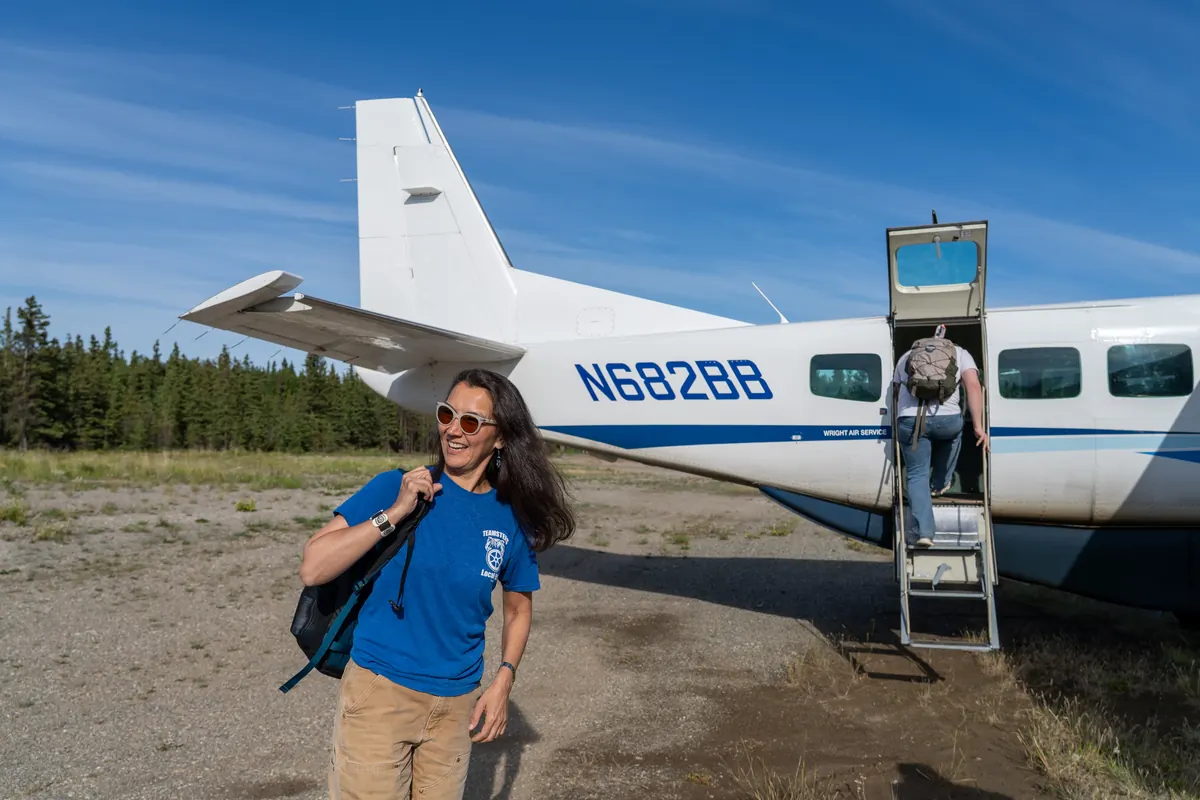
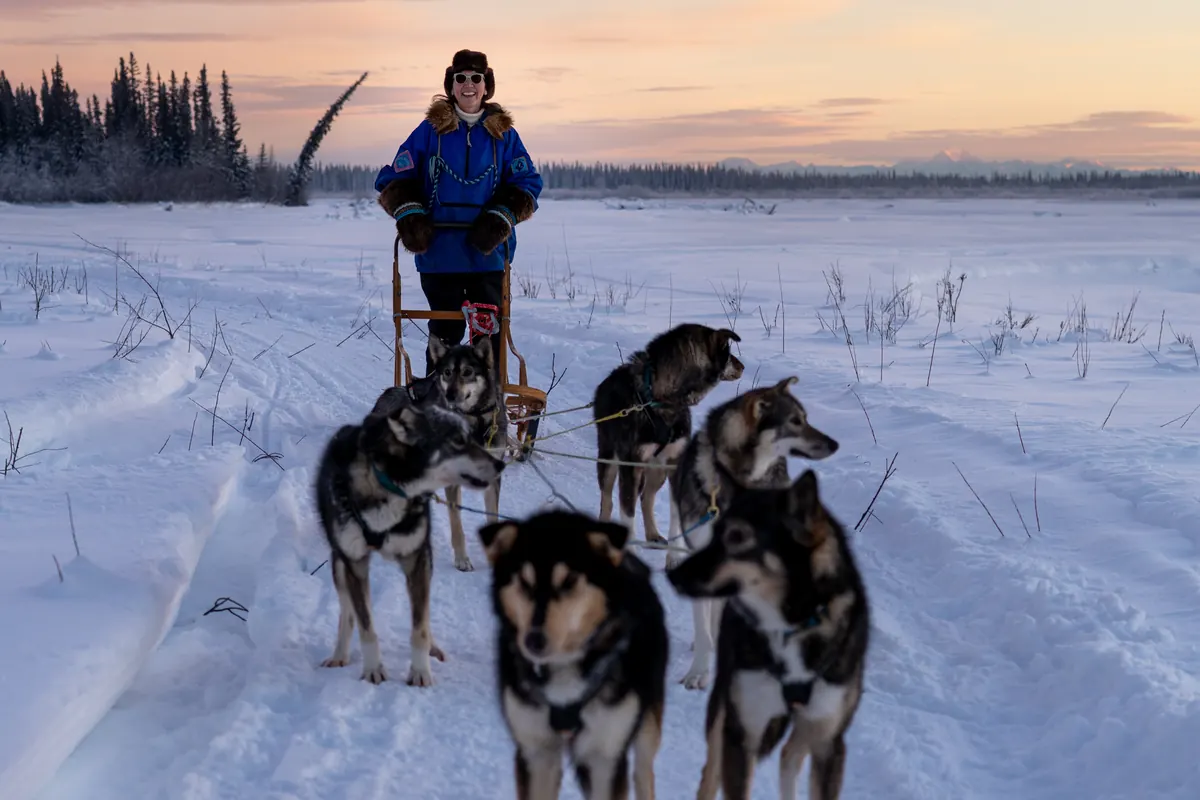
- This election season, candidates have hit the campaign trail in bush planes, boats, and dog sleds. (When Peltola’s mother was pregnant with her, she was a volunteer on a congressional campaign; she canvassed for votes on a snowmobile.) During Peltola’s recent Arctic swing, she took flights with the sole purpose of visiting towns with total populations of four hundred and forty-seven, eight hundred and nine, and six hundred and ninety-four.
- After the stump speech at the elementary school in Utquagvik, which is roughly as far from Anchorage as New York City is from Charleston, and following a celebration featuring Iñupiaq drumming and dancing, I met with Peltola. So many of her positions—on guns, on oil—are either centrist or defy partisan categorization, as with the fish. I’d asked one political consultant to name some issues where Peltola differed from, say, Lisa Murkowski, who is a moderate, pro-choice Republican. He thought for a while and said, “I’m struggling to think of a good example.”
- Murkowski is admired by independents and some Democrats in Alaska, while being largely scorned by the MAGA right. It’s not difficult to foresee an inverse dynamic with Peltola and the national left. Peltola’s father was a Republican, and her mother was a supporter of the longtime Republican congressman Don Young.
- I asked Peltola if she saw any parallels between the fish battles and fights elsewhere: against climate change, A.I. monopolization, or against the bankers after the Great Recession. (Kubiak told me that he was worried the pollock industry had become “too big to fail.”) She said no. Salmon is uniquely important.
- “I have not figured out a way to teach my kids Yup’ik values unless we’re hunting and fishing,” she said. As a political issue, its utility is that everyone likes salmon. Peltola told me she has some connections to Utqiagvik, where the big food is muktuk—bowhead-whale blubber and skin. Her late husband liked it. He had a friend in town, and, every year, the man would give him some muktuk. In return, he gave the man some salmon.