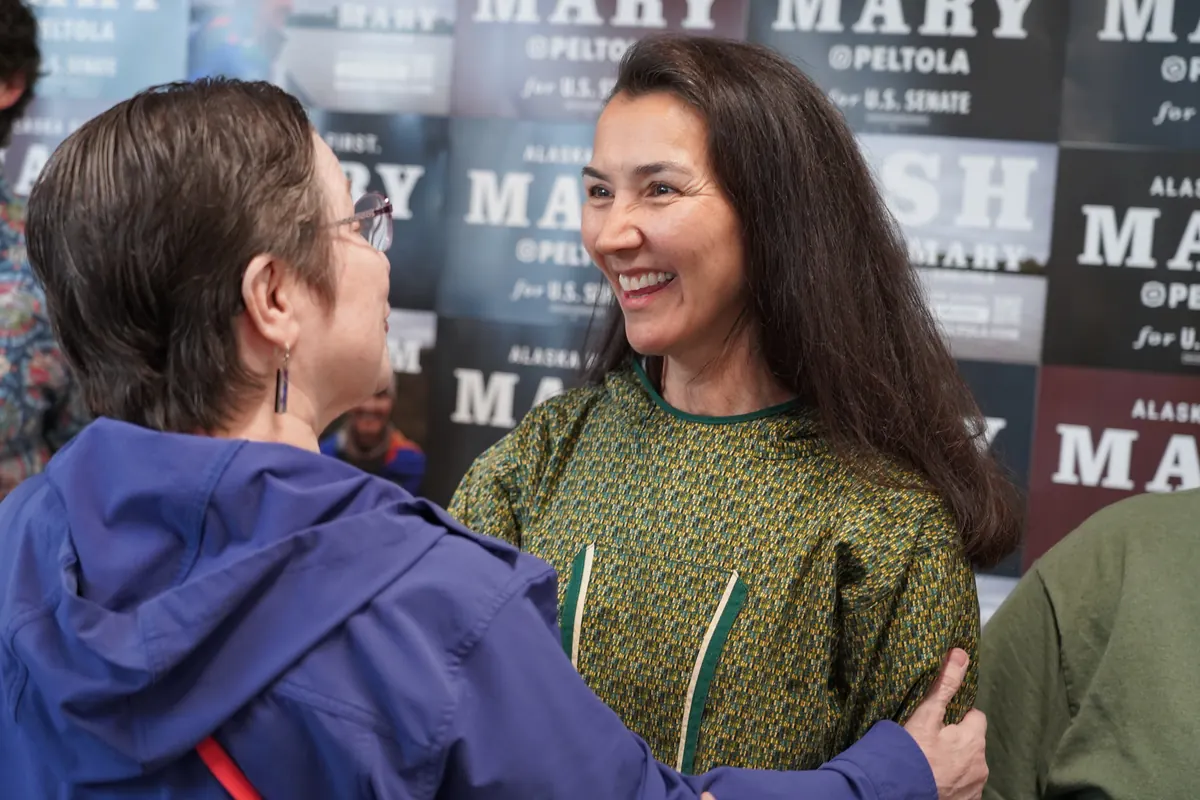
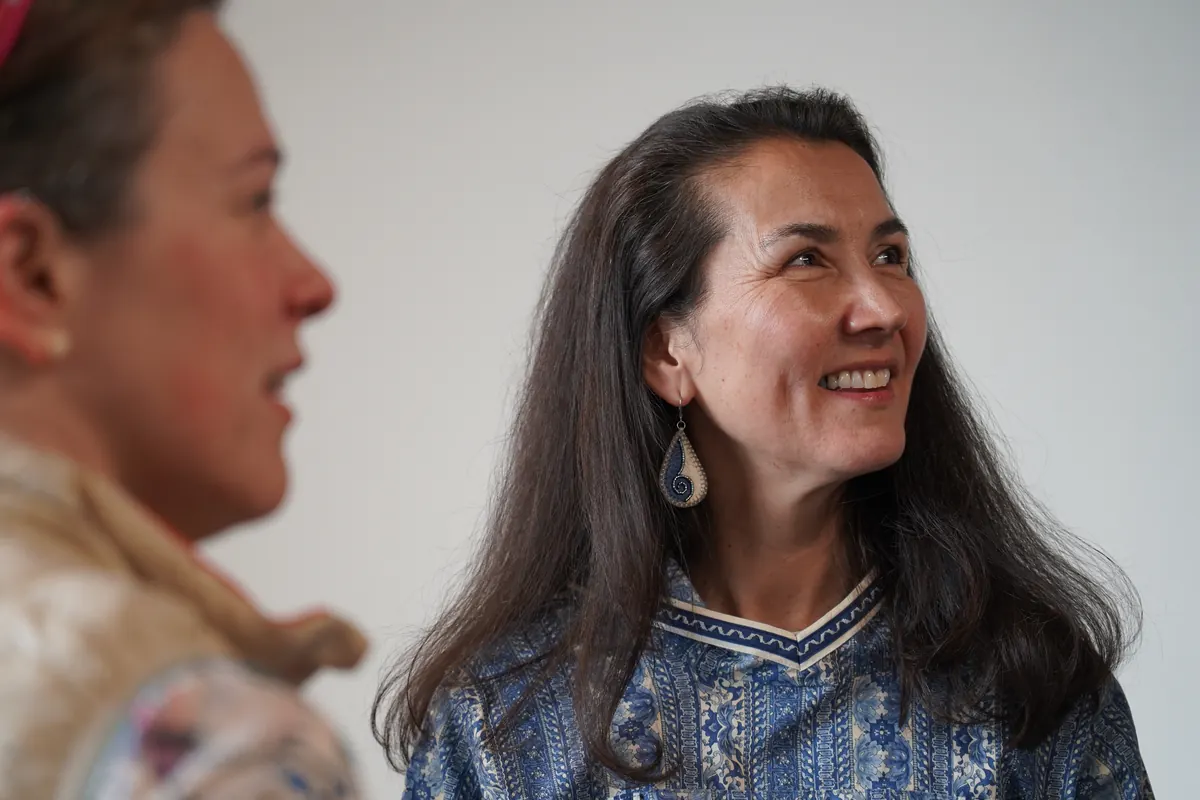
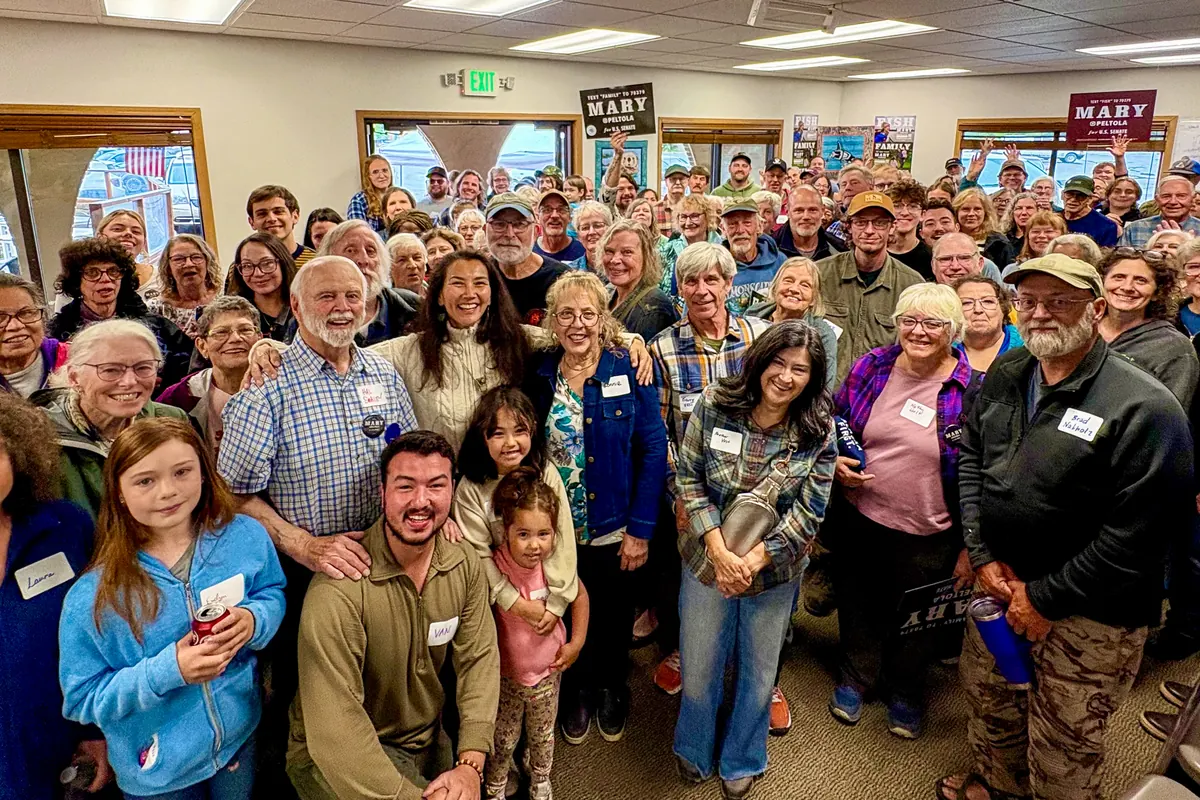
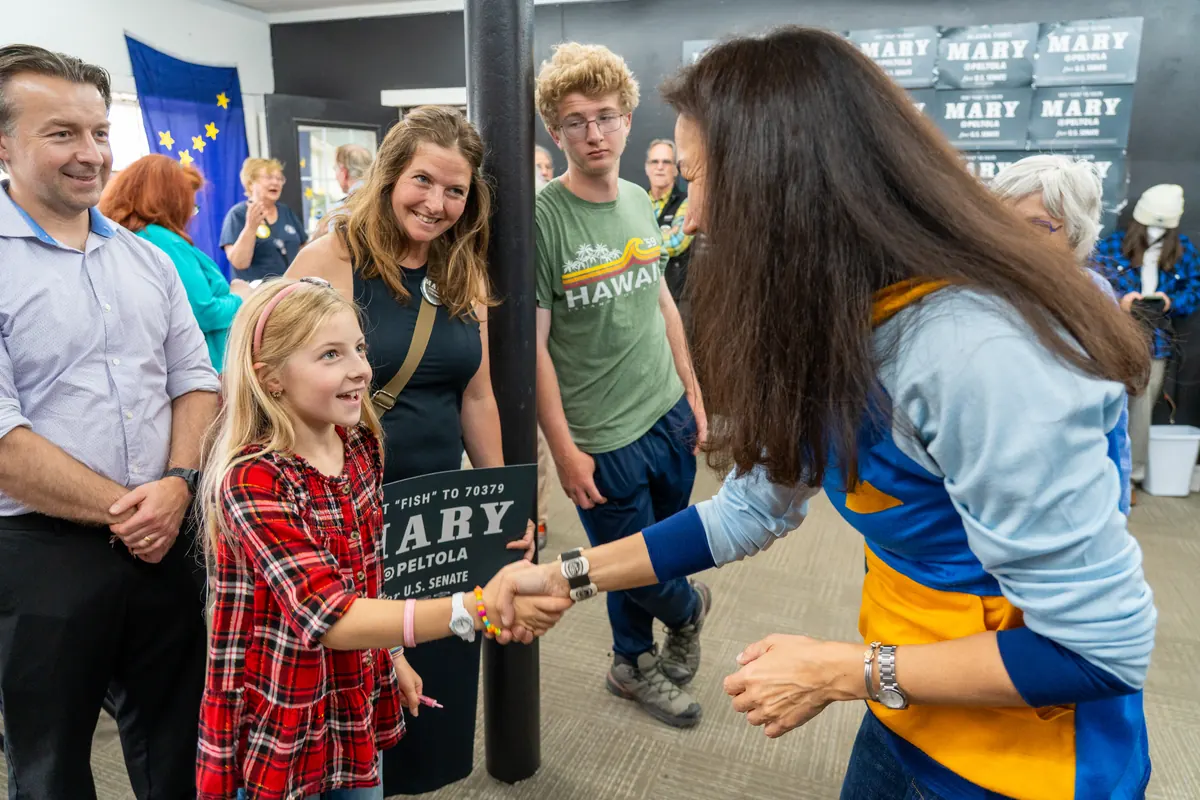
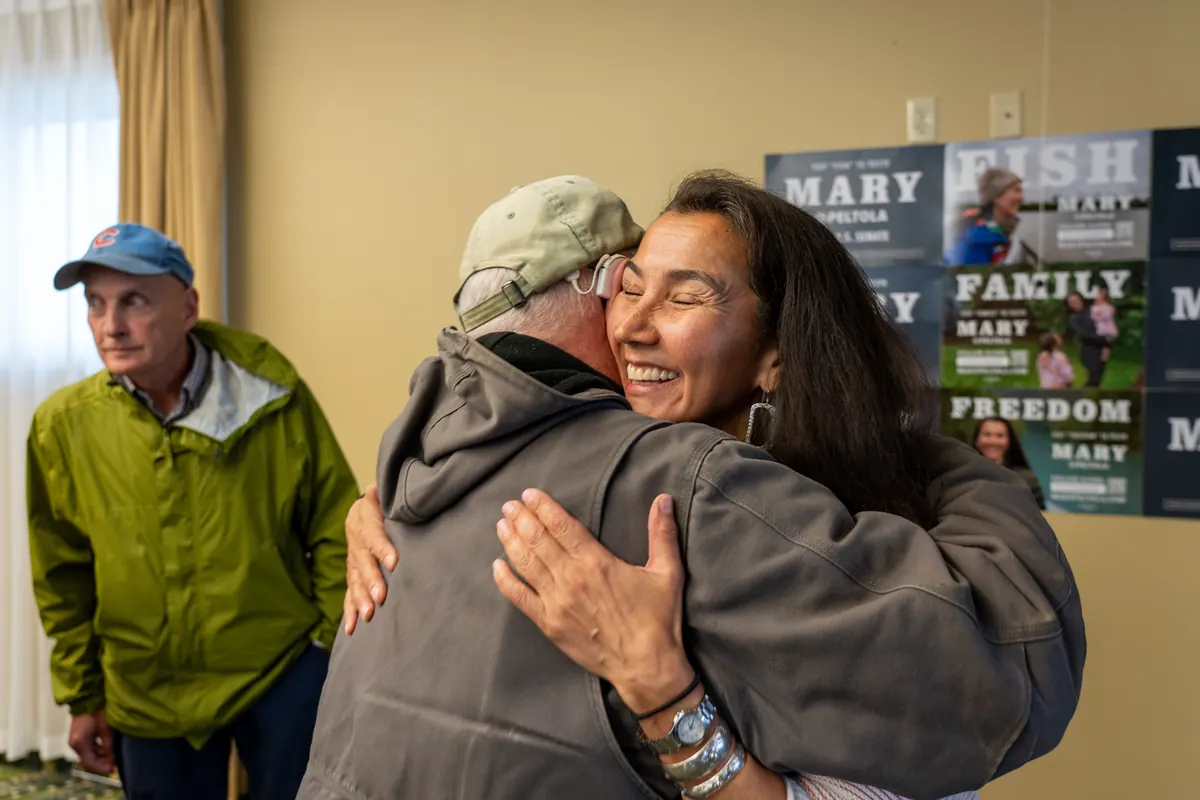
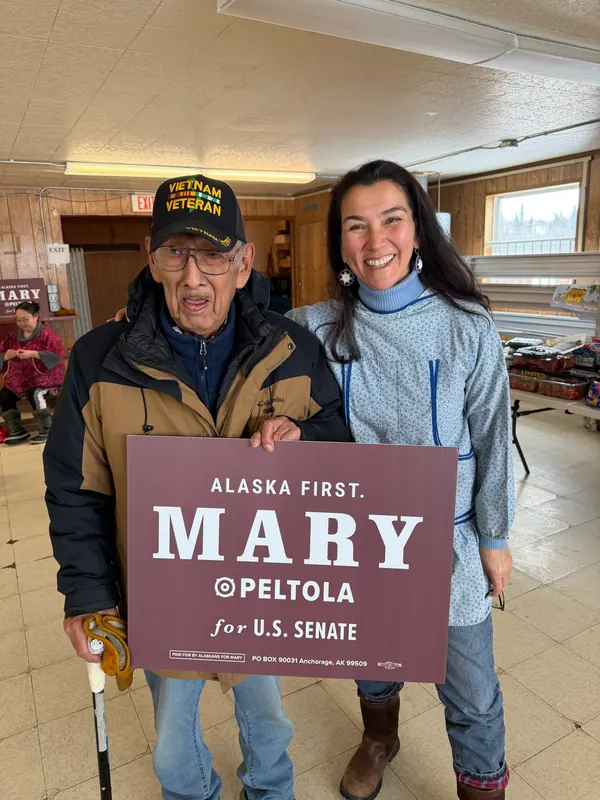
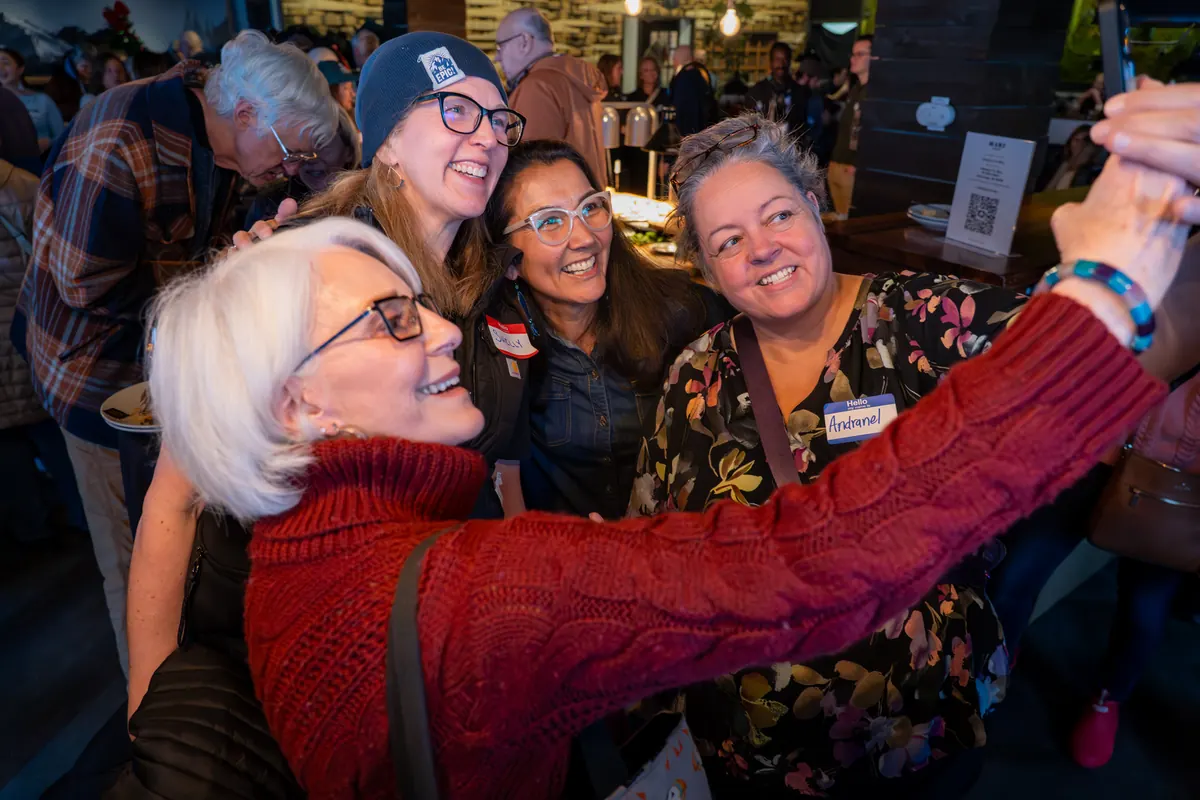
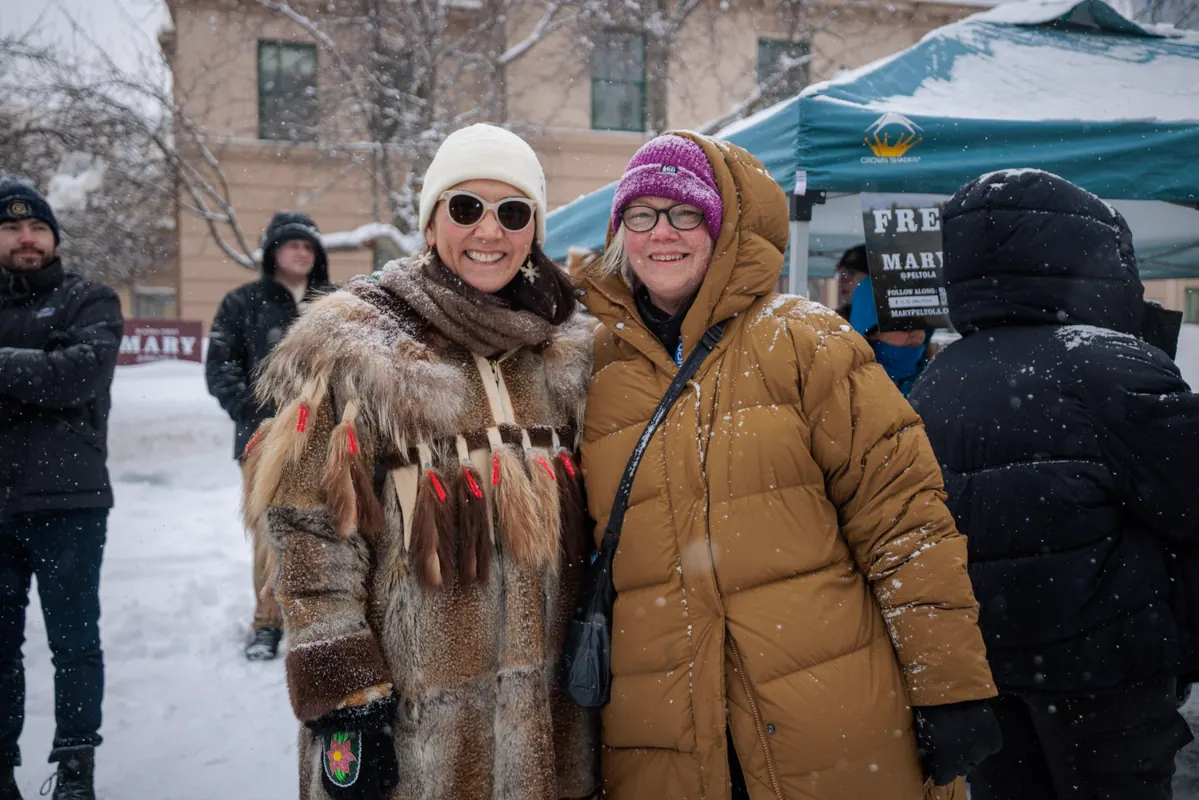
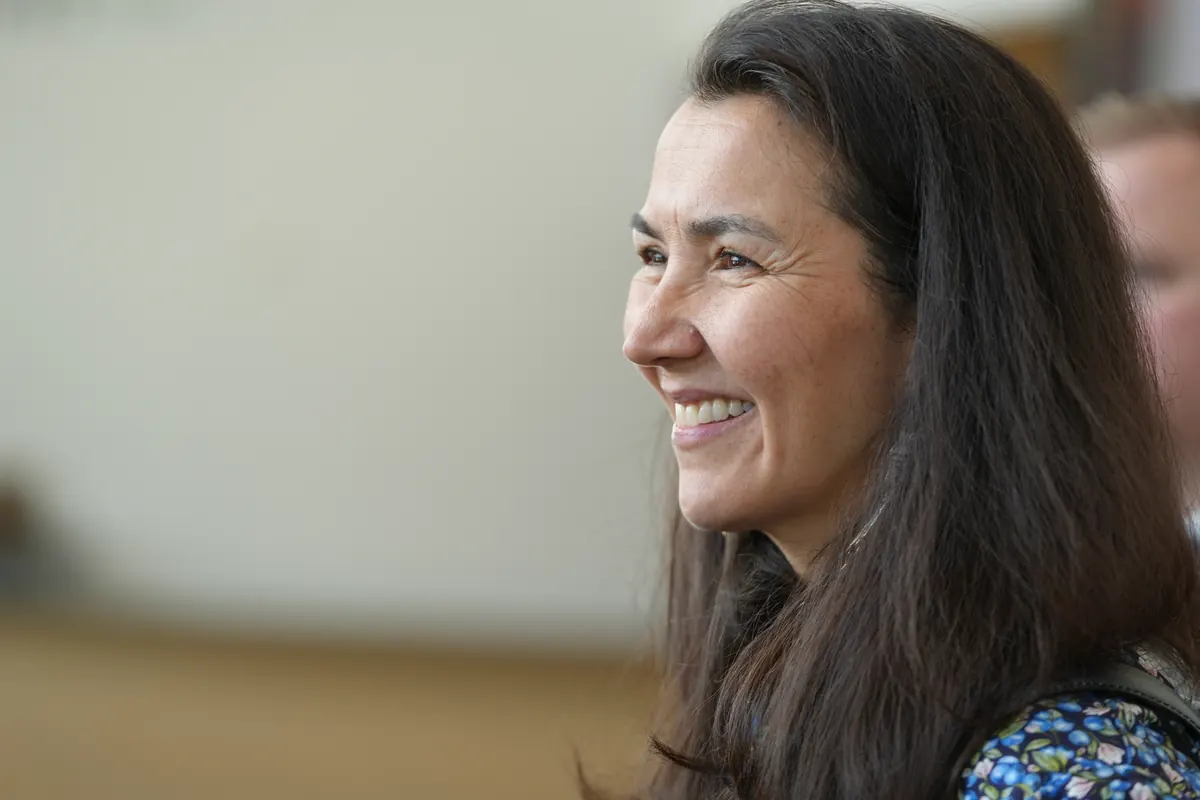
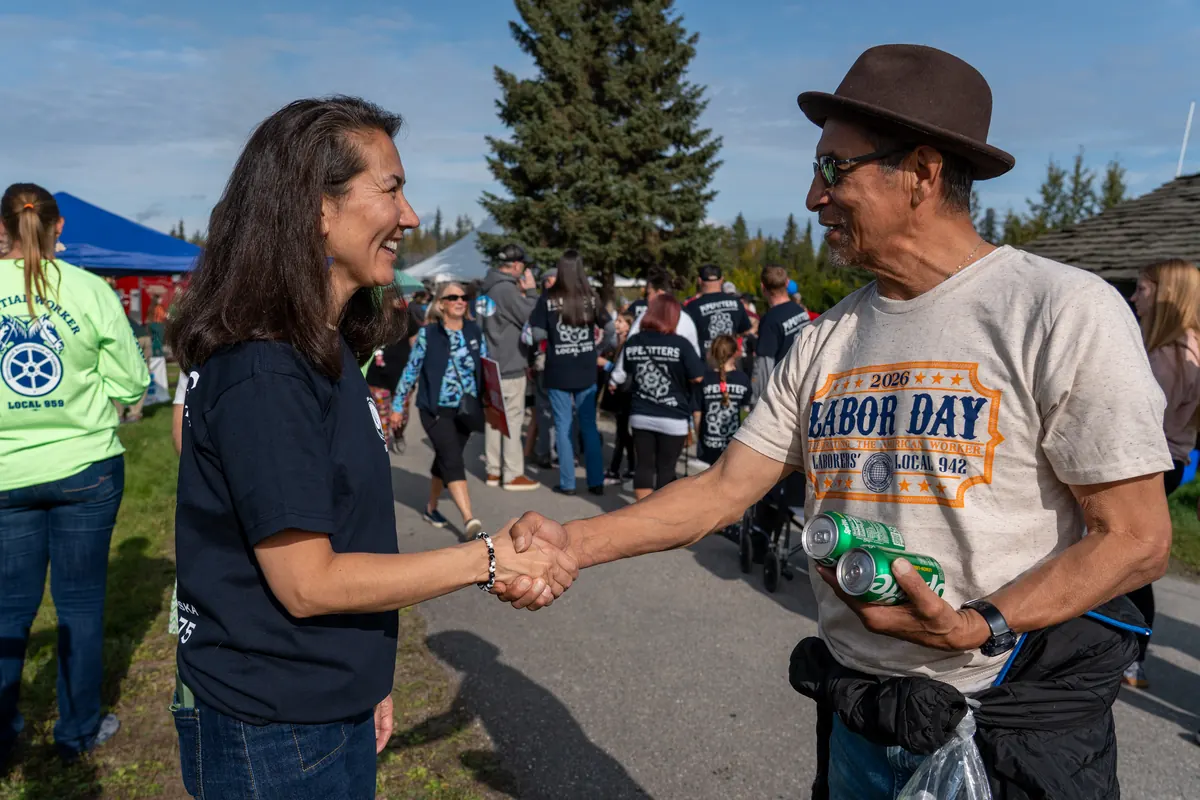
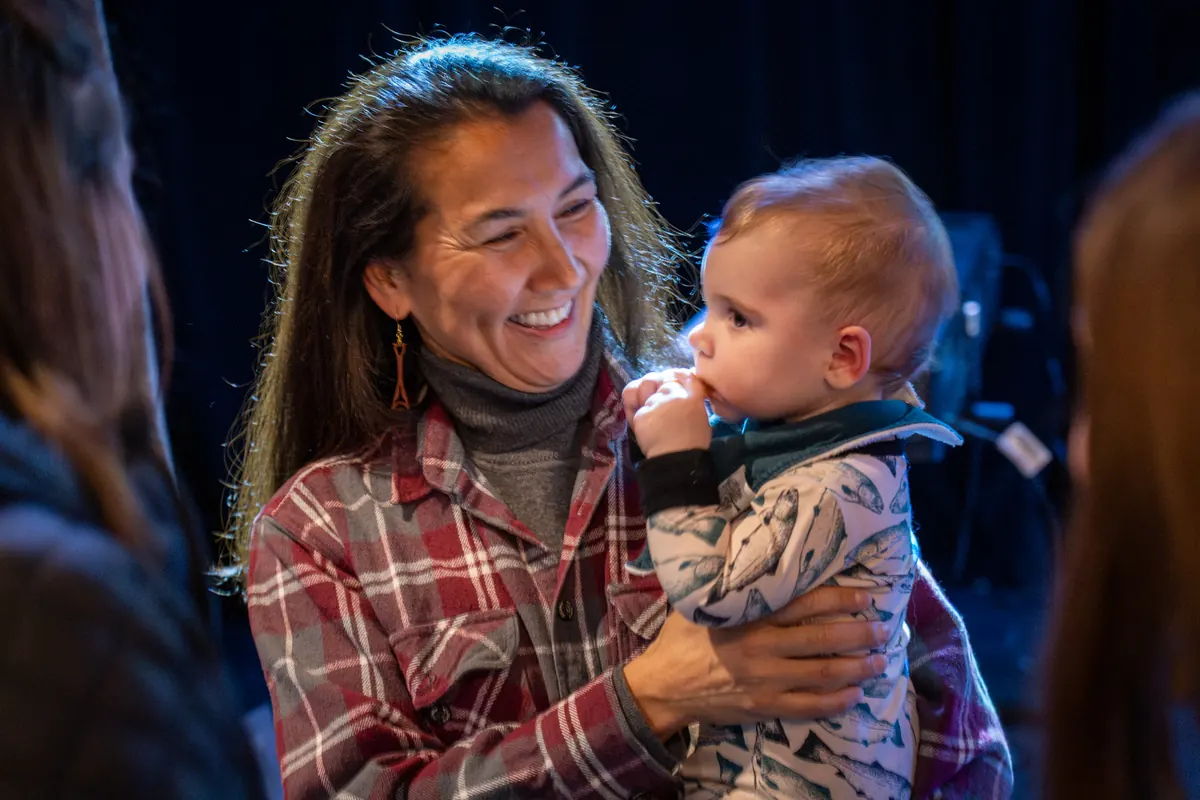
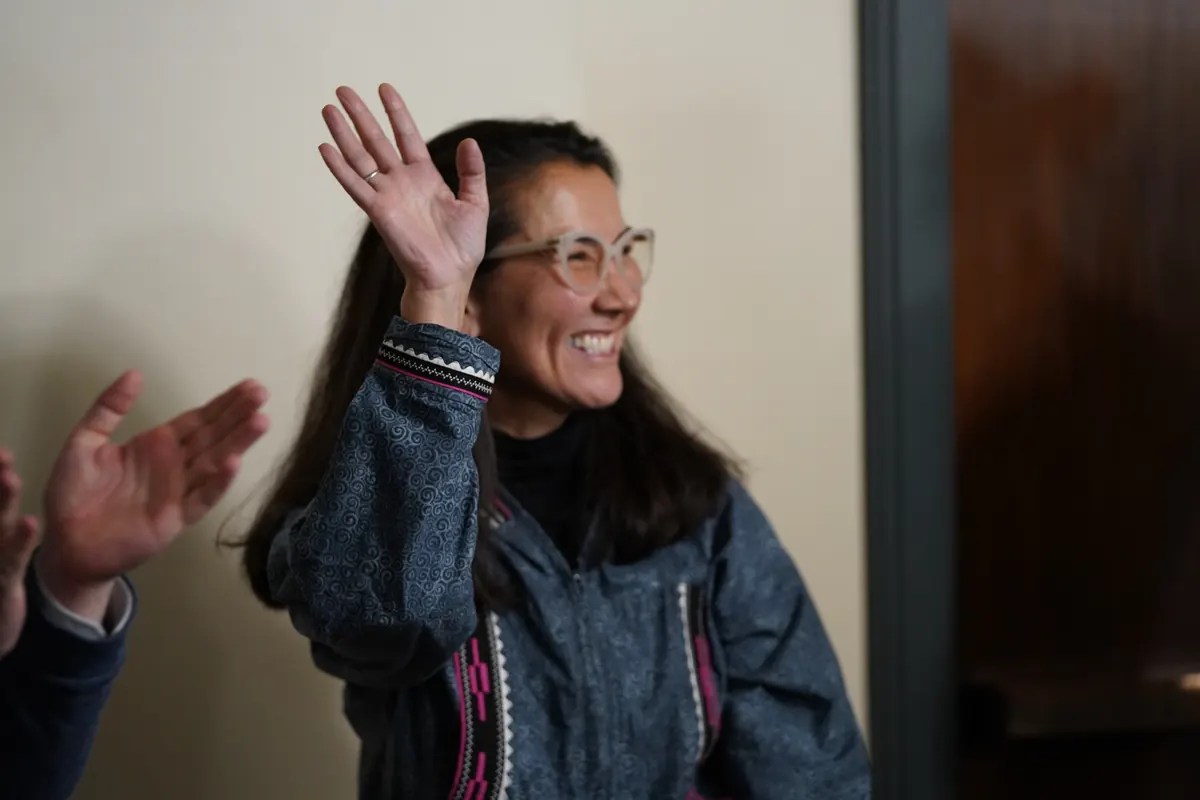
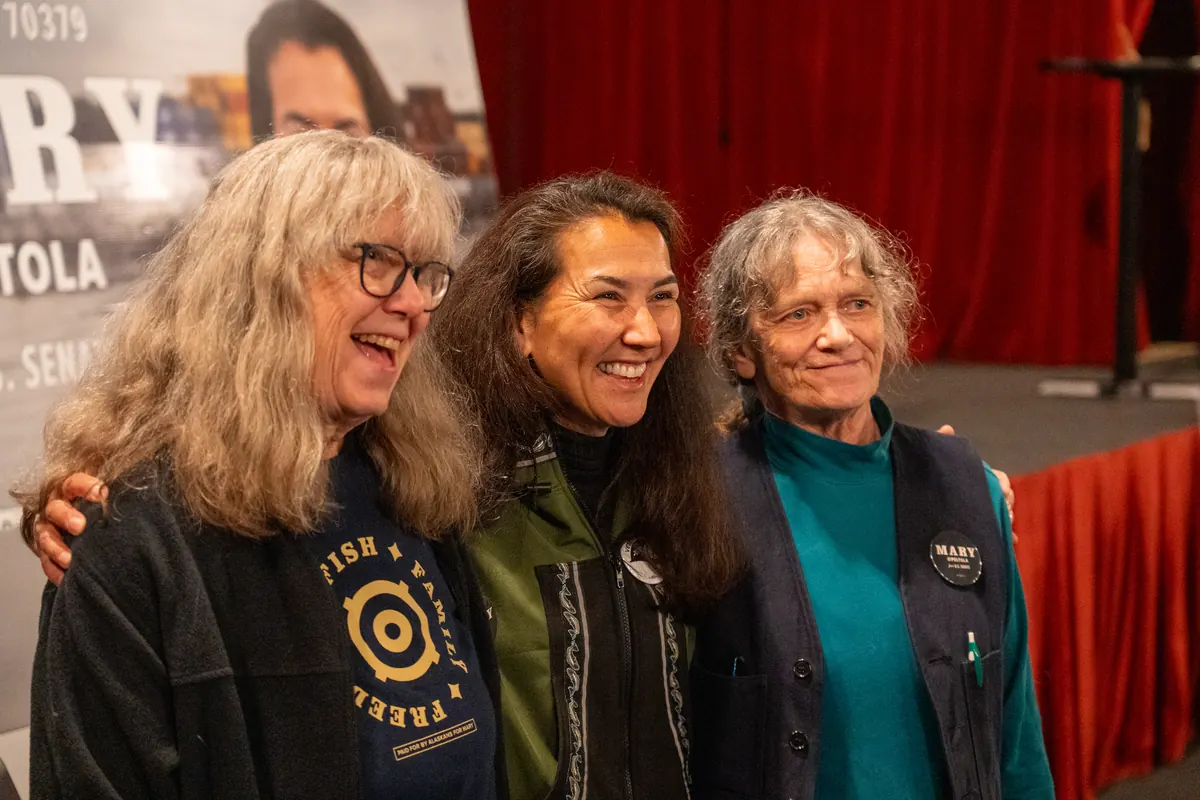
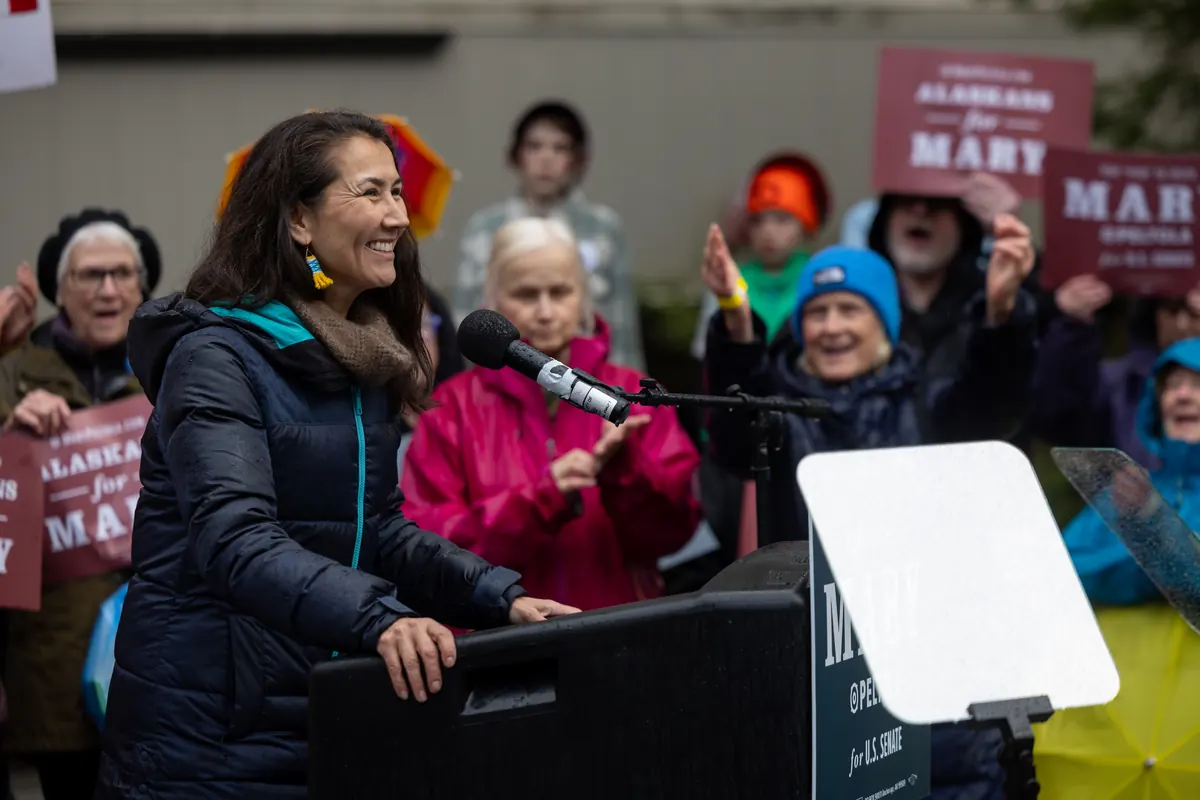
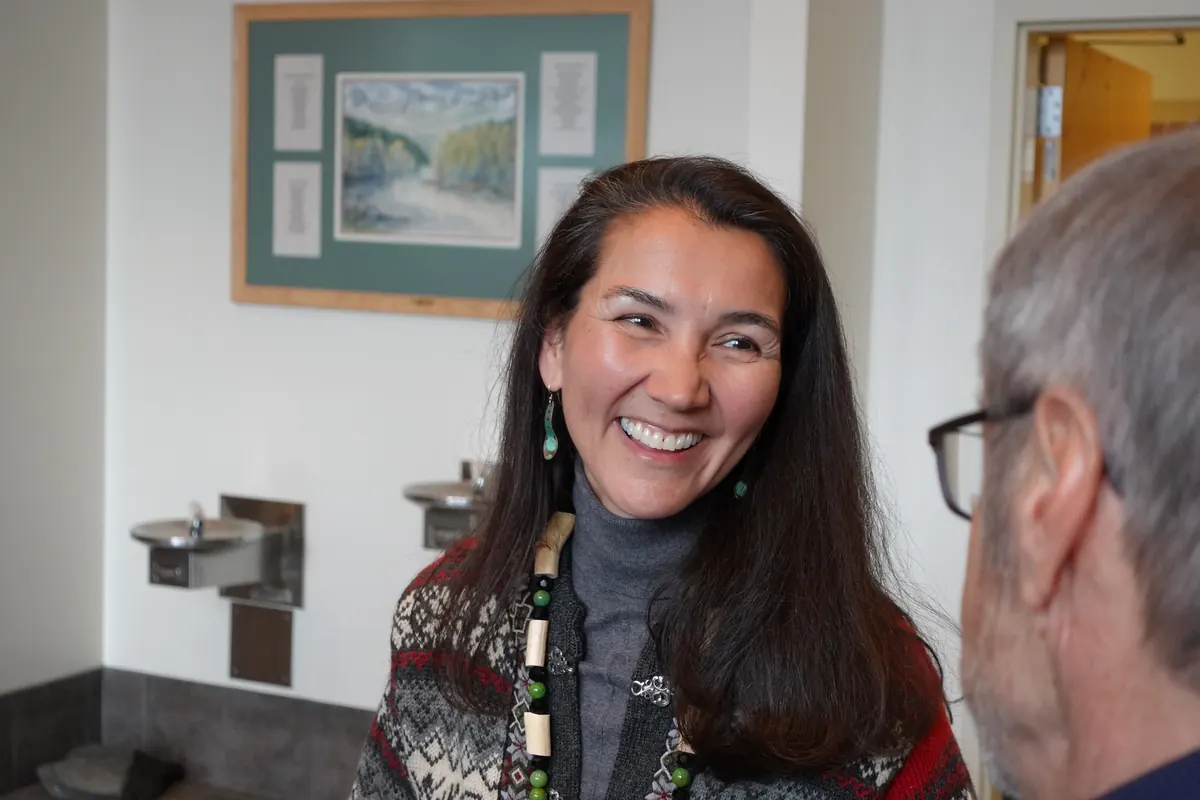
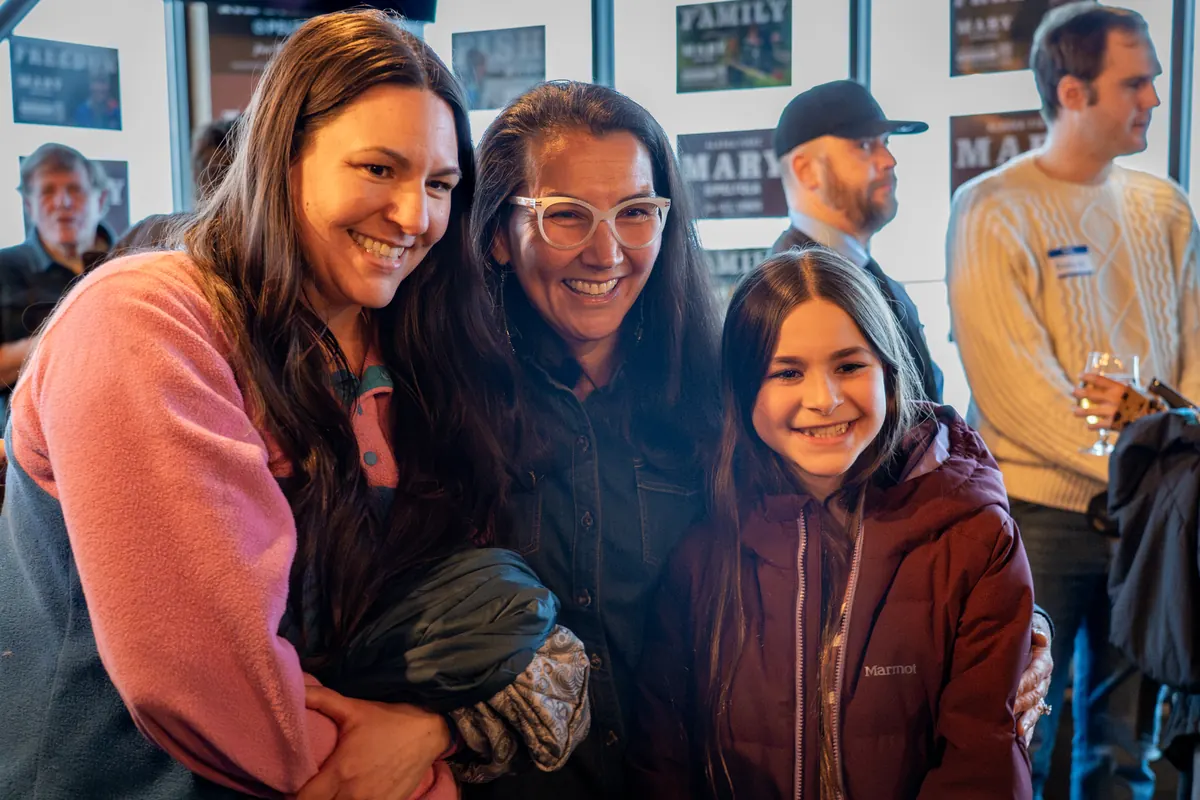
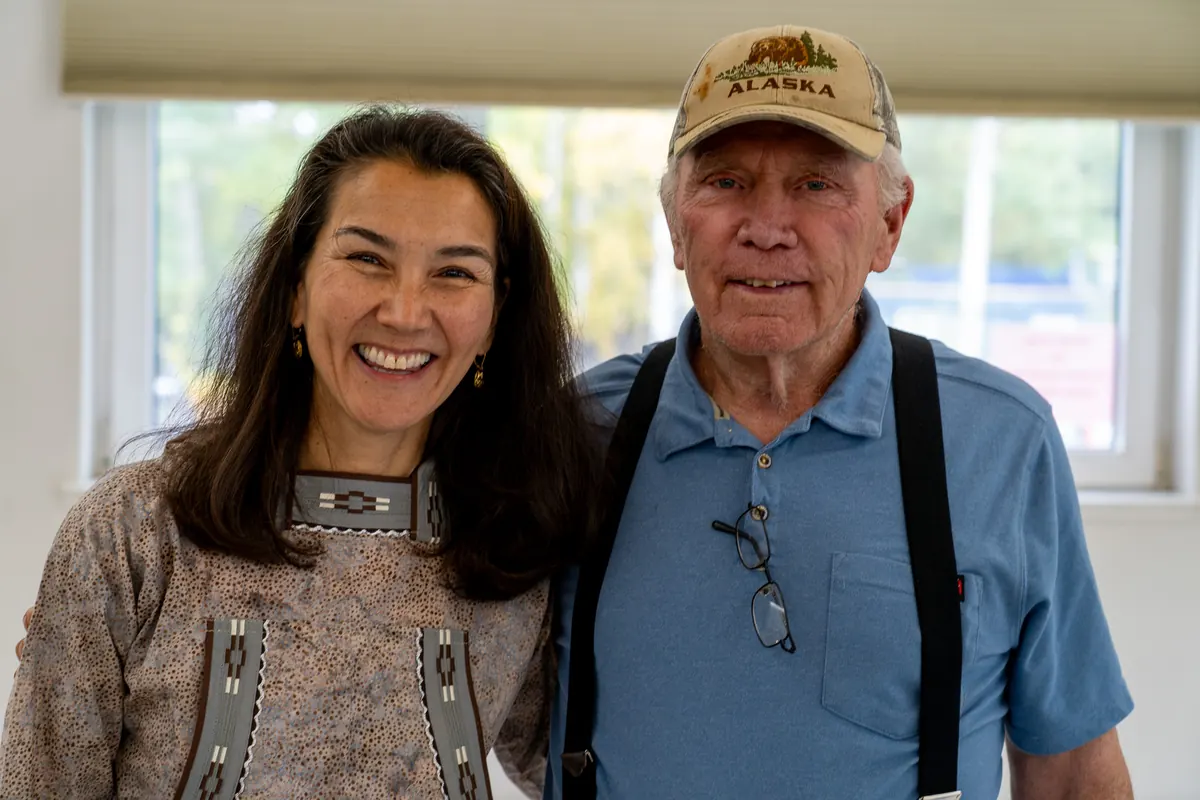
At community meet & greet in Bethel, Mary spoke with KYUK about how she’ll fight for Alaska in the U.S. Senate.
ALASKA – Earlier this week, lifelong Alaskan and former fishing boat captain Mary Peltola held a community meet and greet in her hometown of Bethel, speaking with Alaskans and KYUK about how she will fight to lower costs, restore Alaska fisheries, and put Alaska first as Alaska’s next U.S. Senator.
“We are all feeling it [the rising cost of living], and so I think… what we really need is the political will to make changes and help households, help working people across Alaska make ends meet,” said Mary Peltola. “I think we’re at a point, certainly in Alaska, and I think across the nation, where households are just being stretched to the limit… We expect a Congress that does help us and isn’t do-nothing and isn’t just in it for the millionaires and billionaires, and now the trillionaire.”
In the interview, Mary gave voice to the Alaskans who are being “pinched on all ends” by DC fuel price hikes, skyrocketing grocery, freight and travel costs, and declining fish runs and restrictions. She laid out how she will work to lower prices, ban factory trawling and restore our fisheries, improve rural healthcare, and fight for Alaska communities.
Mary has introduced popular policy plans to lower costs and put more money back in Alaskans’ pockets, restore abundance to our fisheries, and fix the rigged system in DC.
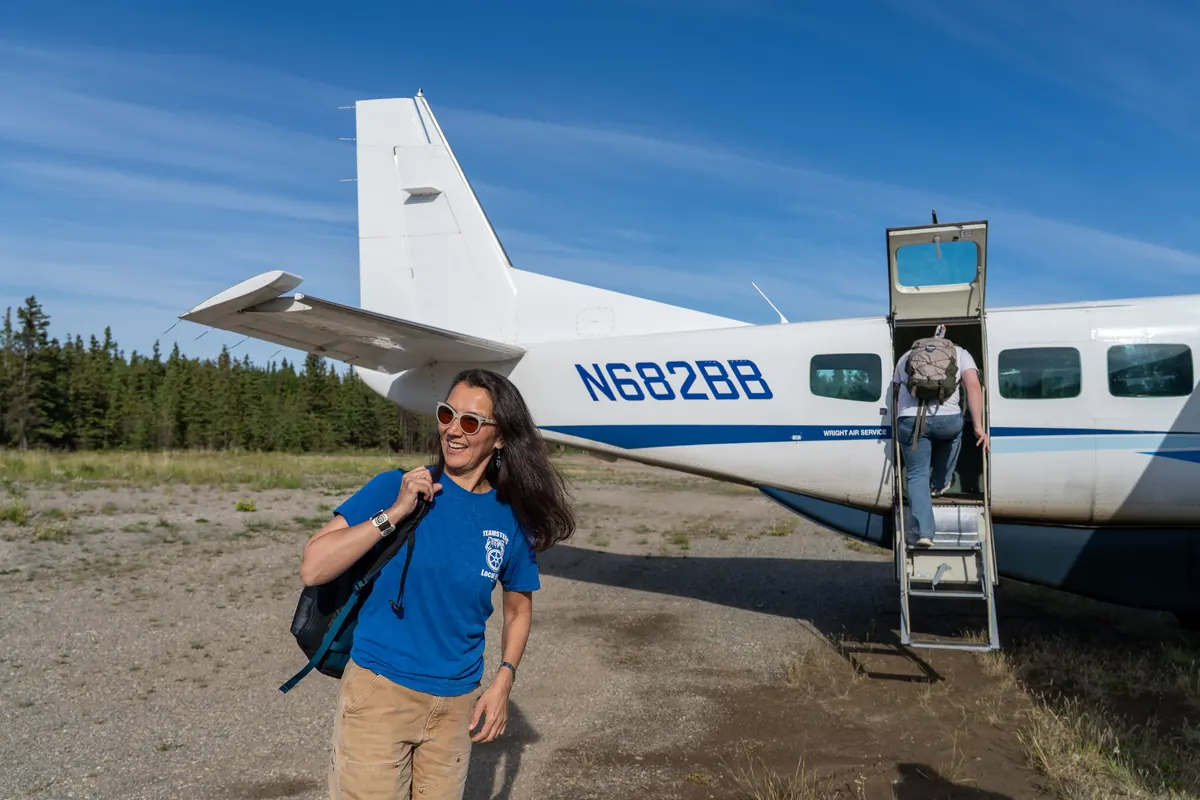
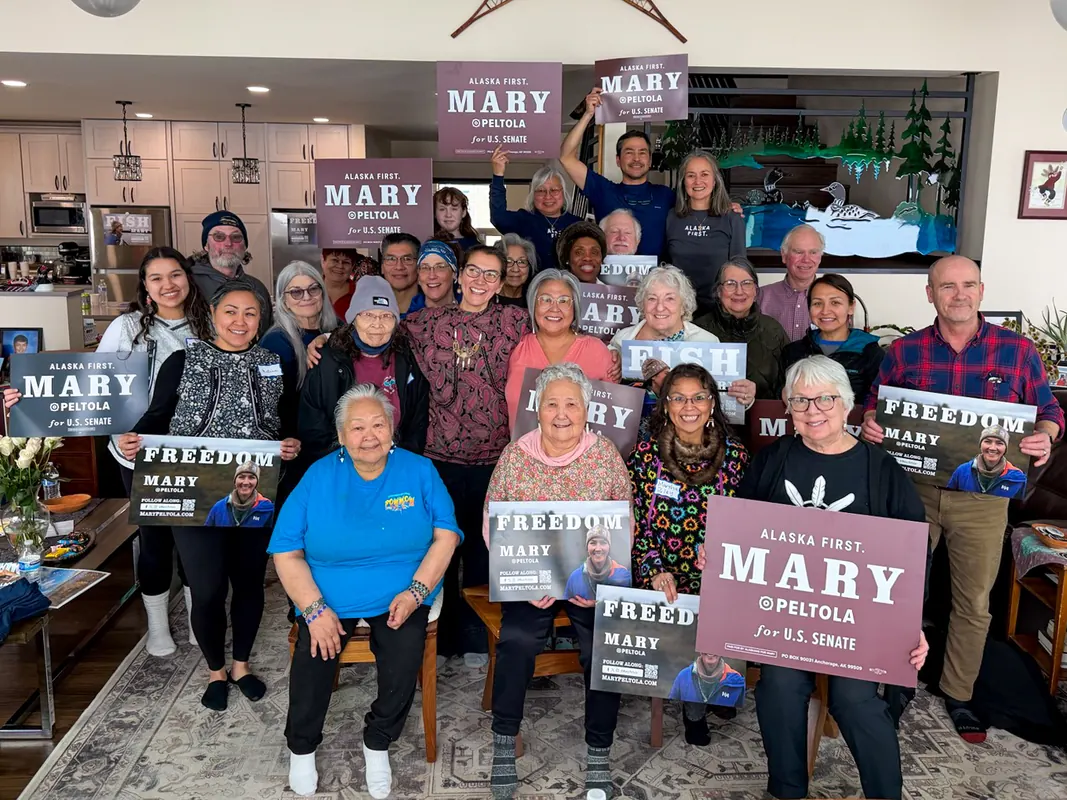
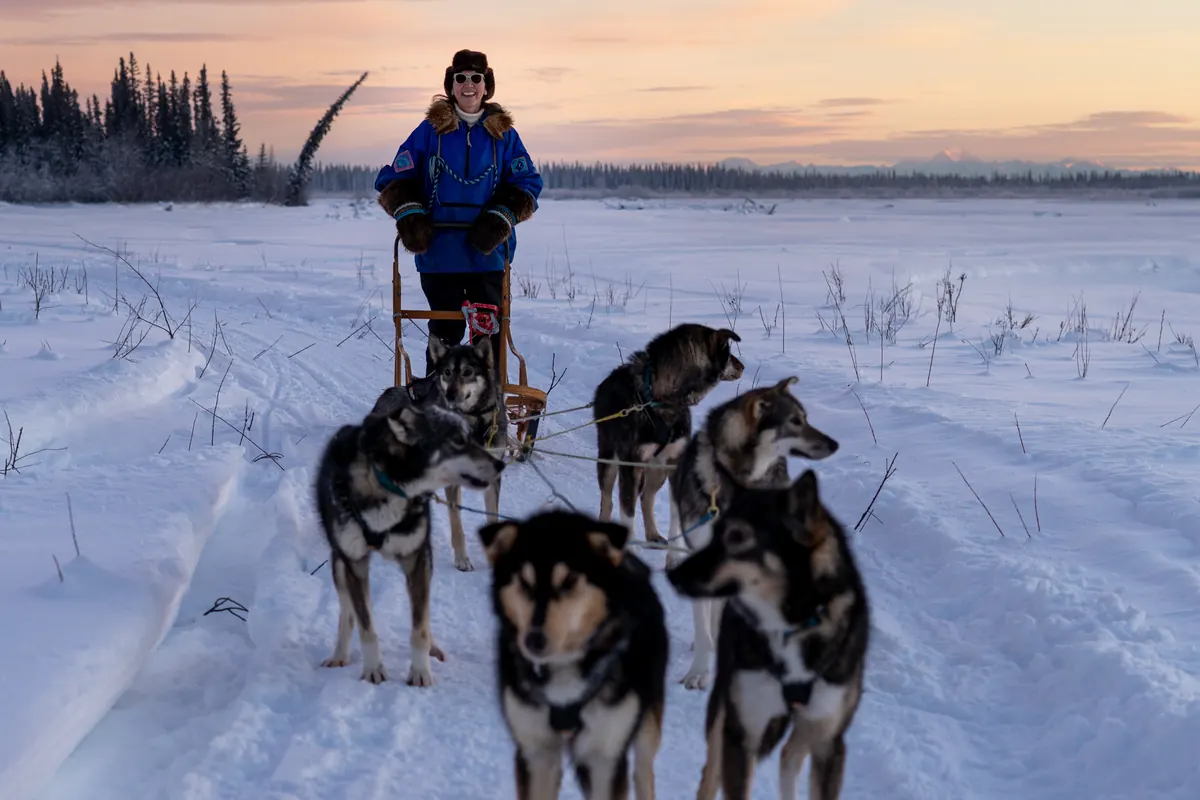
This comes on the heels of unprecedented grassroots momentum for Mary’s Alaska first campaign, as more than more than 10,000 Alaskans from over 160 different towns and communities across the state have signed up to help elect Mary. Mary has been criss-crossing the state for months, talking directly with Alaskans across the Interior, Southeast, and Western Alaska, dog sledding with supporters, rallying Alaskans, and meeting with voters from Fairbanks to Juneau.
KYUK: US Senate candidate Mary Peltola says rural Alaskans are being ‘pinched on all ends’
July 16, 2026
- The campaign trail has led United States Senate candidate Mary Peltola back to her hometown of Bethel in the leadup to the 2026 General Election.
- Peltola is not hard to find around town as a community member, putting up salmon in her yard or marching in Bethel’s Independence Day parade. She’s also been holding candidate meet and greet events in communities across the region.
- In polling, the former Congresswoman appears to be neck and neck with Republican incumbent Sen. Dan S. Sullivan. If elected, Peltola would be the first Democrat to represent Alaska in the U.S. Senate in more than a decade.
- KYUK caught up with Peltola at a recent campaign event in Bethel to ask what issues are top of mind a month ahead of the August primary.
- KYUK (Evan Erickson): How long has it been in your campaign since you’ve been back to Bethel? What does it feel like to be back in your hometown?
- Peltola: Well, I was back at the tail end of the winter. This was such a long, protracted winter, and it, in some years we could have considered it springtime. It was around April, and my campaign and I went out to a number of villages in the [Yukon-Kuskokwim] Delta region, and it was really good to be in the villages, be in person, boots on the ground, and have face-to-face conversations with folks. There’s so much anxiety and stress over fishing restrictions and the limited amount of hunting and fishing opportunities because there just isn’t the abundance that we’re accustomed to, and the stress of that, the stress of the price of gas and oil. That was before the first barges of the year, so there was a lot of concern over the prices that people are paying now, and then the projected prices. I think in Noatak, they are now, I think, paying $21 a gallon. And that is, I think, the upper limit. But even in St. Mary’s, they were paying nine, $10 a gallon, concerned about paying 14, $15 a gallon. So, just a lot of stress about a lack of abundance and subsistence wild food, on top of really high fuel costs and freight costs and travel costs. So we’re being just pinched on all ends and trying to come up with solutions at the federal level to easing some of this pressure and stress.
- KYUK: And there’s this dynamic with fuel here where it could be locked in for the winter, and if elected to [the U.S.] Senate, you would be in a position to possibly grapple with that issue. Are there any specific plans that, at the Congress level, can address what people might be facing out here with the fuel crisis?
- Peltola: Yeah, I mean, I think that we all need to be looking at price gouging and the very limited number of fuel distributors that we have in Alaska. We don’t have enough refineries for in-state oil. I think we need to be looking very seriously at that. The few refineries that we have, most of that product goes to the military, which is great. But I think we need to be serious about expanding that for civilian needs. And then on top of that, I think that this is a good time for the Senate and the House to be looking at the price of fuel, because this is not just an Alaska issue anymore. We’ve always been talking about affordability, and now affordability is a national buzzword. We are all feeling it, and so I think that there may be the political will, and that’s what we really need is the political will to make changes and help households, help working people across Alaska make ends meet. We all feel like financially our households are going backwards every month, and I’m certainly one of those people.
- KYUK: In your tenure in the [U.S.] House, federal fisheries were a huge issue. Do you have any ideas regarding subsistence fisheries?
- Peltola: I have a lot of ideas. I spend a lot of time thinking about this and worrying about it, as we all do. When I was elected in 2022, I helped elevate the fish issue to a statewide and national issue, highlighting that we do have these really serious problems, bringing up the concern that I have about trawling and the trawling industry. And there aren’t many things we can do about acidification of the ocean or ocean temperature rise. The least we can do is get our arms around factory trawling and all of the metric tons of juvenile halibut, salmon, and crab they’re throwing overboard. The way that we’re calling pelagic or midwater trawl midwater when 80% of the time it’s actually touching the bottom. That’s not mid-water trawl. That’s bottom trawling when it’s on the bottom 80%. So let’s look at that. Let’s look at the composition of the North Pacific [Fishery] Management Council. Let’s get serious about reauthorizing the Magnuson-Stevens Act. The last time the Magnuson-Stevens Act was authorized, and that deals with fishing in federal waters, it was 2006 or 2007, 20 years ago. And so many changes have happened since then that we really need to acknowledge and adjust for.
- KYUK: Do you think there’s a political will to change those things across Alaska?
- Peltola: There certainly is. Across Alaska, there certainly is. I think trawling is a very top of mind issue for a lot of people across the state, not just on our big rivers out here. And the industry actually blames me entirely for this being an issue. I don’t want to accept all the credit for the concern. I’m part of a movement, and this is thousands of Alaskans. This is a movement, and I’m just one of many, and happy to elevate this issue. And this is a movement we are all going to have to be completely invested in, and disciplined, and and keep at if we want to see the changes that we need to see in the next five, 10, 15 years.
- KYUK: What’s the path forward healthcare-wise for a place where Bethel serves as this essential hub for medical services, and there are threats to Medicaid down the road. What’s the path forward for keeping healthcare sustainable out here?
- Peltola: We’ve got to be serious about investing in rural health. Rural health across Alaska has been going in the wrong direction, and the trends are now going even faster. There has been a complete ignoring of investing in rural health in a meaningful way, and there were funds put at this, but they couldn’t be used for infrastructure or operating costs that left almost … where would you put it in, technology? Anyway, the system, we’ve really got to be serious about rural health, and you can’t get any more rural than the [Yukon-Kuskokwim] Delta.
- KYUK: What direction do you see this country going in from the perspective of someone from Bethel, from a very unique part of this country?
- Peltola: I’ve got to be optimistic. It’s really tough when you’re listening to the news and how divisive things are, and anything you do or say, you’ve got 50% of the people enraged at you. That’s tough, but I’ve got to remain optimistic. And Yup’ik people believe that the most powerful thing on Earth is the human mind, that when we set our mind to something, we can do anything. I firmly believe that, and I think we’re at a point, certainly in Alaska, and I think across the nation, where households are just being stretched to the limit, and we are going to see the electorate rise up and say we expect a Congress that does help us and isn’t do-nothing and isn’t just in it for the millionaires and billionaires, and now the trillionaire. And we’ve got to make sure that America is going forward and that we see each other as allies, and and we’re working together-Republicans, Democrats, Independent, nonpartisan, undeclared, every kind of party from everywhere. We’ve got to be working together, and that’s what keeps me motivated and keeps me going.
###